

Starting out small with blacksmithing is a good way to build skills without getting in over your head. You’ll get to mess around with the basics – shaping, bending, finishing metal – while turning out stuff that’s actually useful. These small projects are perfect for learning the ropes and making things you can keep or hand off to friends.
Every project brings something different to the table. Maybe you’re working on a clean bend, or just trying to get your hammer blows under control. Before you know it, you’re shaping metal into something that actually does something. Tackle a handful of these smaller ideas, and you’ll start feeling way more confident about moving on to bigger, trickier work.
1) S-hooks

S-hooks are a classic starting point, they’re quick to make and teach you a bunch of core hammering skills. Just a couple bends and tapers, and you’re in business.
They come in handy all over the place. Hang up tools, utensils, or even a plant if you want. Try making a few in different sizes – that’s a good way to work on consistency.
Once you’re feeling bold, try adding a twist or a little decorative touch. You’ll get to play around with style, but the project stays simple and useful.
2) Bottle openers

Bottle openers are a fun one. You don’t need much steel, and it’s usually a fast project. It’s a good excuse to practice drifting and shaping, too.
Lots of people start with a flat bar design before messing around with twists, textures, or even goofy shapes. You’re picking up skills and ending up with something you’ll actually use.
If you want a chunkier opener, railroad spikes are great. They’re not hard to find, and the finished opener feels solid, plus, people love getting them as gifts.
3) Skewers

Skewers are about as straightforward as it gets. Grab some mild steel rod, heat it up, and draw out one end to a point.
Give the handle a twist for some extra practice with even heating and control. Or maybe curve the end a bit so it’s easier to hold.
They’re perfect for campfire cooking – meat, veggies, marshmallows, whatever. Crank out a set and you’ll get lots of repetition, which is great for building muscle memory.
4) Tongs

You’ll want your own tongs sooner or later, since you’ll use them all the time. Sure, store-bought is fine, but making your own teaches you a lot about shaping and fitting metal.
Start with flat bar stock and hammer out the jaws, reins, and boss. Flat-jaw tongs are a good bet – they hold all sorts of stuff.
Making tongs means you’ll work on drawing out, punching, and riveting. Later on, you can try out different jaw shapes for whatever you’re forging next.
5) Chisels

Chisels are a solid starter. Grab a bit of tool steel and a hammer, and you’re set. There’s not a ton of tricky shaping involved, so you can focus on control and accuracy.
Shape the blade, taper the edge, and leave enough for a handle. You’ll need to harden and temper it so it stands up to use, but that’s good practice, too.
Having a handmade chisel in your kit is honestly pretty satisfying. It’ll come in handy for future projects, too.
6) Square-headed nails

Square-headed nails are awesome for practicing hammer control and getting your technique dialed in. You’re working with small pieces of mild steel, so it’s not overwhelming.
Heat up a short section of bar, taper one end, and then form the head with a nail header or just use the edge of your anvil.
These nails grip wood better than the usual round ones. Make a batch and you’ll get a lot of practice, plus you’ll have something handy for woodworking or small builds.
7) Simple leaves
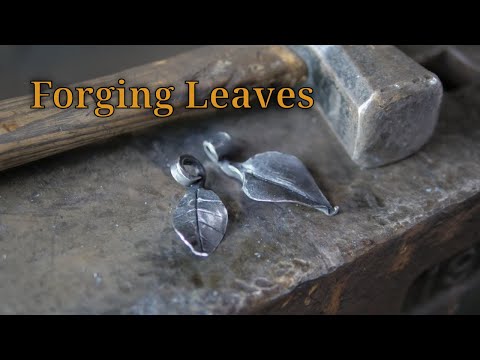
Forging simple leaves is a fun way to try out different hammer techniques. You’ll get to taper, draw out, and shape edges, but the pattern isn’t complicated.
Leaves are great for practicing angles and hammer control, skills you’ll use on almost every other blacksmithing project.
You can leave them basic, add texture with a chisel, or bend them for a more natural vibe. They’re cool as keychains, decorative hooks, or just practice pieces.
8) Basic hooks
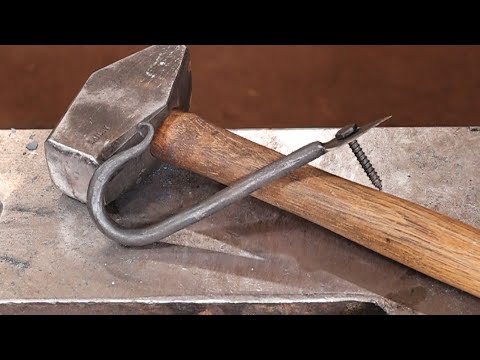
S-hooks or J-hooks are a breeze to make. They only need a few hammering steps and teach you how to taper, bend, and twist metal. You’ll use these skills again and again on other blacksmithing projects.
Hooks don’t take much steel, so you can use up scrap and not worry about wasting anything.
Once you’re done, you’ll have hooks for tools, coats, or even the kitchen. They’re practical, quick, and a nice way to build up some confidence at the forge.
9) Fire pokers

Fire pokers are a go-to beginner project. All you really need is a straight bar of steel, and you can shape the end into a point or a bend for moving logs.
Twist the handle for better grip and a little style – doesn’t add much time, but it looks nice.
You’ll get a feel for tapering, bending, and twisting, and those are all things you’ll use for bigger stuff later.
10) Keychains

Keychains are a simple way to practice forging. Simple keychains don’t need much steel, and you can knock one out pretty fast.
Try out different shapes – leaves, spirals, tiny tools, whatever you’re feeling. It’s a chance to work on hammer control and get a clean finish, without burning through your steel pile.
Because they’re small, you can make a bunch in one go. They’re easy to give away or sell at a local market, too.
11) Small candle holders

Candle holders are a nice way to work on hammer control and shaping. A basic version might use a short piece of round stock for the base and a little cup for the candle.
Mix it up with different bases; flat discs, twisted stems, curled feet. You can add your own spin without using a ton of material.
Scrap metal is perfect for this, and you don’t need much to get it done. Quick project, useful result.
12) Letter openers
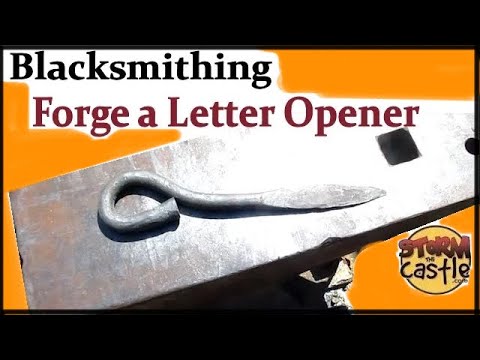
Letter openers are a great way to practice the basics. You’ll draw out a taper, flatten the blade, and shape a simple handle. The project’s small, so you won’t spend all day on it.
Rebar or mild steel both work fine. Twist the handle, add a scroll, or just keep it simple, it’s up to you. The finished opener is handy and makes a nice little gift.
Make a few and you’ll get better at the basics. Plus, you can try out different handle ideas each time.
13) Plant hangers

Making plant hangers is actually pretty fun, and you don’t need to get fancy with the technique. Just a few bends, maybe a little twist here and there, and you’re set. A simple hook with a curled end does the trick for hanging smaller pots.
If you want to spice things up, hammer in a leaf detail or add some texture. It makes the piece pop without turning it into a massive project. You’ll get some solid practice with scrolling and shaping, but it won’t feel overwhelming.
Mount these on walls, posts, or even from the ceiling if you’re feeling creative. They’re practical gifts, and honestly, they’re just handy to have around if you like plants or know someone who does.
14) Wall hooks

Wall hooks are one of those useful projects that let you practice basic hammer control without too much fuss. Start with a straight piece of steel, taper one end, then bend it into shape – nothing too wild.
There’s a lot of wiggle room for style. Some people keep them super plain, others go for twists, curls, or just smack the hammer to add some texture.
Hooks like these fit just about anywhere. Kitchens, garages, entryways, you name it. They’re quick to finish, so you can crank out a few in an afternoon and actually use them or hand them out to friends.
15) Bottle stoppers

Forging bottle stoppers is a fun, low-material project. You can play around with different tops, maybe a twist, a little leaf, or just a smooth rounded knob.
Stick a cork or rubber insert on the end, and you’re good to go. The metal part becomes a little handle, and the insert keeps it snug in the bottle.
They’re great for practicing small details, and you can personalize them if you want. Makes a nice gift or just a handy thing for your own kitchen.
16) Decorative nails

Hammering out decorative nails is a solid way to work on shaping skills. They don’t need much steel, and you can bang out a handful in a short session.
Try switching up the head shapes, square, round, maybe flared. Each one is a little different, so you’ll get better at making them match if you want a set. Plus, they look cool as display pieces or accents.
You can use these nails in furniture, wooden boxes, or just hand them out as quirky gifts. They’re easy to repeat and give you a real feel for heating, tapering, and heading.
17) Door knockers

Making a door knocker is a cool way to mix practical and decorative work. Usually, you’ll be shaping a steel bar into a ring or bar, then attaching it to a plate or hinge. It’s a nice excuse to try out bending, punching, and maybe a bit of riveting.
A railroad spike or a chunk of round bar works for the main part. You can keep it simple or add twists and details if you’re feeling confident.
They’re actually really useful, and you can sell them or give them as gifts. Plus, you get to practice a bunch of different blacksmithing moves in one go.
18) Miniature anvils

Miniature anvils are a fun little project if you want to work on shaping and finishing. They don’t have to be full-sized or even totally functional, but they look like the real deal in miniature.
People often use scrap steel or bits of old railroad track. Shaping the horn, heel, and face is surprisingly good practice for precision work, even if it’s tiny.
These mini anvils look cool on a shelf, and they’re a neat addition to any tool collection. They also make a thoughtful gift for another blacksmithing enthusiast.
19) Utensil handles

Shaping metal for kitchen utensil handles is a great way to get used to hammering and bending. Just grab a small round or flat bar, heat it up, and work it into a comfortable grip.
If you want to get creative, try adding a twist or some little decorative touches. It’s a good way to practice symmetry and balance, and you’ll see pretty quickly if things get wonky.
Handles like this are actually useful, especially if you attach them to spoons, ladles, or spatulas. Not a bad way to build up your skills and end up with something you might use every day.
20) Hooks for hanging tools

Hooks are honestly one of the easiest things you can whip up at the forge. Grab a short chunk of steel, heat it up, and start swinging that hammer – suddenly, you’ve got something handy. They’re quick to make, so you can get a lot of practice shaping bends or throwing in a little twist if you’re feeling fancy.
You’ll probably end up using them for hammers, tongs, or whatever else is always getting lost on your bench. Making a bunch in one go? That’s a solid way to keep your shop less chaotic, and you’ll get better at making each one look like the last (or not, if you’re like me and don’t care if they all match).
Try out different curves or sizes, just to see what works best for your stuff. Big, chunky hooks are perfect for heavy tools, while the little ones are fine for keys, brushes, or random odds and ends.