

Blacksmith vs. Whitesmith – What’s the Difference? (A Side-by-Side Comparison)
Metalworking in its various forms has evolved over millennia and into specific specializations, such as blacksmithing and whitesmithing, or tinsmithing, as it is also commonly known. Although both blacksmiths and whitesmiths work with metal, the types of metal, the processes used to manipulate the metal, and the history of these crafts differ in several important ways.
It has been said that blacksmithing and whitesmithing are opposites in many ways. Blacksmithing is oftentimes a loud and physical process, whereas whitesmithing is more delicate, meticulous work. Both metalworking techniques have proven useful in history and remain of interest to both craftspeople and the general public.
Where Did Blacksmithing Originate?
Blacksmithing is an ancient craft that developed around 1500 BCE in what is now Syria. It spread across Asia and Europe and eventually to the Americas and was an extremely important occupation for much of human history since its development.
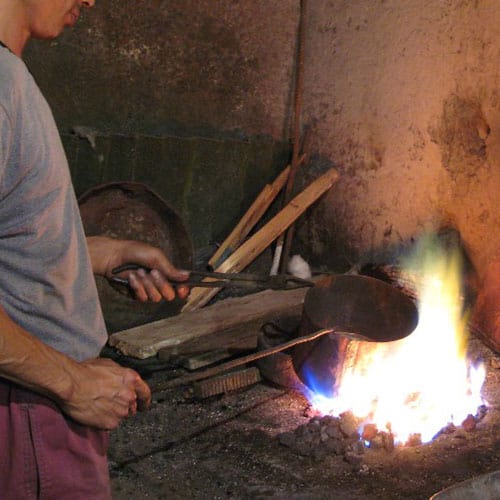
The term “blacksmith” comes from the heating process required to manipulate iron. When a blacksmith heats up iron in his forge (which holds hot coals), the surface of the iron develops a black color due to oxidation. Blacksmiths have historically worked in a variety of settings, from castles to quaint villages and from bustling cities to wild frontier settlements.

Today, blacksmiths continue to work all over the world in workshops that, in many ways, resemble those of a medieval or frontier smith. While the products made by blacksmiths enjoyed more use in history than they do today, smiths continue to work metal into a variety of goods, both functional and collectable. Blacksmithing as an occupation and hobby has evolved throughout the centuries, but it is still prevalent and important in modern times.
Where Did Whitesmithing Originate?
Whitesmithing, or tinsmithing, is a much newer form of metalworking that developed in the late 1600s and gained popularity in the 18th and 19th centuries. Although found worldwide, whitesmithing was popular in mainland Europe and especially Britain. It was so important to the British economy during the American Revolution that the British did what they could to keep tin and smithing supplies out of the hands of the rebellious Americans.


While blacksmithing continues to be a relatively popular occupation and hobby in various parts of the world, whitesmithing is less prevalent in modern times. Whitesmithing is typically demonstrated during historical reenactments by skilled artisans but is less well-known than blacksmithing. You can find workshops today that run programs teaching the basics of tinsmithing, but they appear less popular than blacksmithing programs.
Whitesmithing vs Blacksmithing Processes & Tools
Blacksmithing as a process is generally louder and messier than whitesmithing, and focuses more on producing larger products. Blacksmith workshops contain large equipment like forges to heat iron, anvils to shape the iron in endless ways, and a variety of smaller tools for shaping and finishing projects.

Traditionally, blacksmiths seldom bought tools to work with, but instead made their own to suit the specifics of different projects. Blacksmiths could acquire hundreds of unique tools over the course of their careers. Blacksmiths work with larger amounts of metal than whitesmiths do and because of this, the process involves loud hammering and physical strength.
In contrast, whitesmithing is a quieter and cleaner metalworking process. Whitesmiths historically worked with thin sheets of iron or steel that were dipped in molten tin to protect the metal from rust and provide a lightweight, aesthetically pleasing finish. In colonial America, tinsmiths worked with sheets of tin shipped from Britain measuring 10-13 inches or around 25-33 centimeters.

Tinsmith workshops in the 18th and 19th centuries employed around three workers: one to cut the tin, one to shape it, and one to solder the seams and add any finishing touches. Besides working the metal into various shapes, soldering the seams required careful attention to detail and a special tool called a soldering rod. This tool had a bronze tip that was heated and then pressed on the seam of tin projects to close it and make it water-tight.
What Products do Blacksmiths Produce?
Historically, blacksmiths created tools and other useful everyday goods out of iron and steel. Farm implements, nails, household tools, horseshoes, armor, and weapons all could be crafted by a local or castle smith. Today, blacksmiths usually create collectible, decorative and artistic items like swords, daggers, sculptures, furniture, and jewelry. There are blacksmiths working today who also continue to make more traditional products. Items created by blacksmiths can be found at craft fairs, art studios and physical and online shops.

While blacksmithing as an occupation has lost much of its influence after the influx of factory-made goods in the late 19th century, the products made by blacksmiths today are still readily available and valuable due to the materials worked, the labor involved, and the skills of the blacksmiths that create them.
What Products do Whitesmiths Make?
Whitesmiths in history generally created smaller, more domestic goods than blacksmiths did. A whitesmith living in the American Colonies during the Revolutionary War commonly crafted canteens, small boxes, cups and plates for soldiers needing sturdy, lightweight personal items. Other products made by whitesmiths included: lanterns, chandeliers, kettles, candlesticks, spice shakers, and pans.


The products made by whitesmiths or tinsmiths generally are worth less than those of a blacksmith because of their size, the type of metal used, and the amount of labor required to create them. Historically, the wares of a tinsmith could be found easily at local shops or could be purchased from traveling smiths who went from town to town advertising their products. Today, you can find tin goods on different websites and in person at workshops and historical reenactment sites.
Thanks for your guide on the difference between blacksmithing and whitesmithing. My grandpa is looking for a custom blacksmith artist because he wants to have a metal model of his old car. I didn’t know that blacksmiths today usually create collectible, decorative and artistic items like swords, daggers, sculptures, and jewelry. I hope I can find one for my grandpa.
Prior to the early 20th century or the colonial revival period the name Whitesmith had no relation to the trade of a tinsmith. A whitesmith historically was actually an individual that cleaned, files, ground, or polished iron or steel related items such as tools and such.