

List of Famous and Legendary Japanese Swordsmiths [Updated]
Japan has a long and colorful history of swords and sword making. Thanks to historical programs, tv, movies, and more, the katana and samurai are now popular icons of Japanese sword history and culture.
The men responsible for making katana swords are just as fascinating as the powerful samurai who wielded them. The earliest swordsmith can be traced to the 8th century, while modern smiths continue to work in large cities like Tokyo and smaller villages throughout Japan.
While not much is known about many of the earliest swordsmiths in Japan’s history, we do know that they used advanced forging methods and careful designing to create some of the recognizable and enduring swords in world history.
Here is a list of some of the most famous and important swordsmiths of Japan. Their contributions tell us much about not only Japan’s sword history, but also the history of samurai, clans, conflict, power, and social class throughout hundreds of years.

- Hardcover Book
1) Amakuni Yasutsuna
(8th Century)


Amakuni Yasutsuna is thought to be Japan’s first swordsmith. He lived during the 8th century and as one of the earliest sword makers in Japanese history, not much is known about him. What we do know has been passed down through the centuries as folk tales and legends.
Yasutsuna is credited with creating single edged katanas from his forge at the emperor’s armory.
2) Emperor Gotoba
(Kamakura Period)
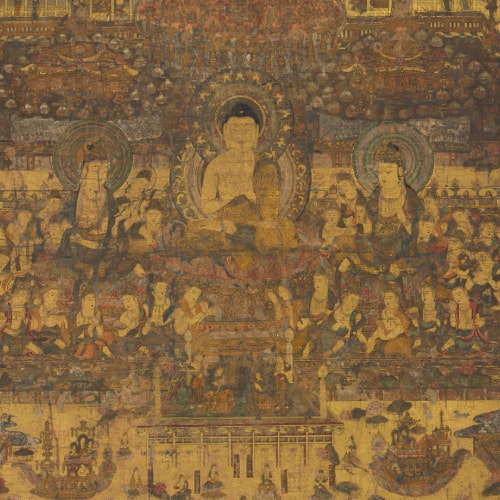
Emperor Gotoba was another early swordsmith in Japanese history and the 82nd Emperor of Japan. He hired many sword makers to work in his royal armory during his reign and took a personal interest in the crafting of blades.
Emperor Gotoba already excelled at martial arts, archery, and horseback riding and this curious and talented royal learned swordsmithing from the masters who came to his forge.
Gotoba became a great swordsmith in his own right and went on to found his own school.
3) Masamune
(Kamakura Period)
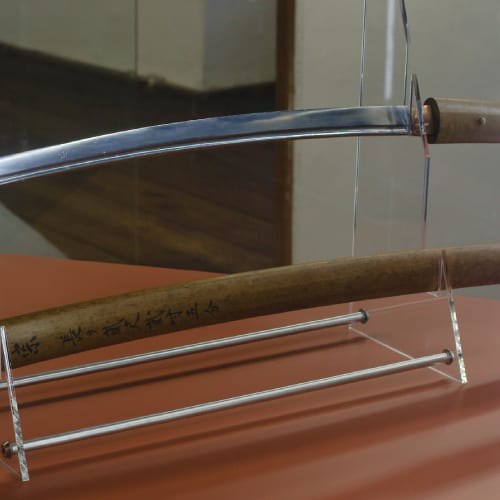

By far the most famous swordsmith on this list is Masamune. Fans of Japanese history and swords will recognize the name of this highly accomplished and respected craftsman.
Masamune lived in the Sagami Province of Japan during the Kamakura Period. He is thought to have lived and worked between 1288 and 1328.
Masamune created swords that were both powerful and beautiful. He developed a bladesmithing method that involved using martensitic crystals and arranging them in a pearlite matrix. This blade design gave the appearance of stars in the sky.
In his lifetime, Masamune designed and finished between 41 and 61 swords. He also founded a school and passed down his knowledge to many students, including his own son. His blades are considered national treasures of Japan and are sources of admiration and pride to this day.
4) Hikoshiro Sagami Kuni Sadamune
(Kamakura Period)


Historians believe Hikoshiro Sagami Kuni Sadamune was Masamune’s adopted or biological son and student. As a student of his father, Sadamune learned Soshu School techniques and was extremely accomplished.
Sadamune proved so adept at sword making that he received the “mune” part of Masamune’s name.
While Sadamune completed many swords in his lifetime, one of his most famous swords is the “Rope Cutter” that he designed and built for General Toyotomi Hideyoshi.
5) Mori Nagayoshi
(Warring States Period)
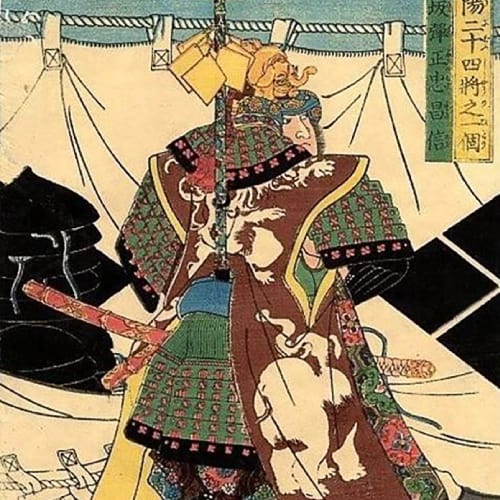

Mori Nagayoshi lived during the Sengoku period and was an officer of the Oda clan of samurai. He utilized techniques from the Bizen and Soshu schools to create high-quality katanas for fellow samurai.
Although not much is known about Nagayoshi, we do know that his techniques for katana making were highly advanced and effective. He forged at a higher temperature than his contemporaries to create extremely strong and durable blades.
6) Muramasa Sengo
(Warring States Period)

Muramasa Sengo lived during the Muromachi Period and more specifically, the Warring States Period. Although he lived after Masamune, the two swordsmiths are often compared to each other as the most famous smiths in Japan’s history.
Muramasa was a favorite of elites and made katanas for the Shogun Tokugawa Ieyasu. Although Muramasa achieved much success in his career, many dark legends have cropped up regarding his blades.
Since Muramasa lived and worked during a very turbulent and violent period of Japanese history, it is no surprise that folk tales say his blades were cursed. Although a favorite of a shogun, Muramasa’s swords were used to kill the shogun’s grandfather and son.
Muramasa’s katanas were also wielded in battles during the civil war of the time.
7) Yoshihara Yoshindo
(Present Day)

Yoshihara Yoshindo is the preeminent swordsmith of Tokyo and greater Japan. He is a modern day master sword maker and the only one of his kind in the city of Tokyo.
Today, very few swordsmiths work full time in Japan. Yoshindo is one of these few smiths whose katanas are highly sought after by domestic and international buyers.
Yoshihara Yoshindo comes from a long line of swordsmiths. His family has been working in the trade for 10 generations. Yoshindo specializes in the Bizen tradition of sword making.
He works with up to six apprentices at a time, who learn by doing and assist him in forging perfectly balanced katana blades. It takes them about ten years to become a master like Yoshindo.
Because katana making is such a highly specialized process that is seeped in history, the tools required are not available for purchase. Yoshindo makes all of his own tools and teaches his apprentices how to do the same.
Each blade made by Yoshihara Yoshindo takes about three months to complete and prices for each sword start at $60,000.
Besides smithing, Yoshindo is also a successful author. His blades are currently on display in some of the top museums around the world, including the Museum of Fine Arts in Boston and the Metropolitan Museum of Art.
Does anyone have any information on the sword maker: Tadanori. Lived about 230 years ago. Was a highly reputed master of sword making of the school TADAKICHI. Believe to have made the make of smaller swords of Wakizashi, shorter sword worn by the Samurais.
Any info would be greatly appreciated as writing an apprecis.
Thank you
Hi,
I’m from Bhutan.i’ve completed my intermediate course in blacksmithing under Philippians trainer.i’m the first black smith trained in my country and for a moment I’m serving for my king and working as a trainer for the third cohort under Desuup Skilling Program, which is our Majesty project for our youth.
I’m very interested in making swords,blades and demascus etc.my dream is to make my king proud and to share my ideas to the youth.since I haven’t got enough knowledge on making such as your products I don’t think that I’m good on it.
Therefore if sir could help me to train under your kind comment I would be grateful to you.
Does anybody know about Masa Oku, from what is now Hiroshima Province, he was practicing in 1525. I own a wakizashi credited to him.