

List of the Fencing Sword Types (Characteristics, History, Pros & Cons)

Fencing is a sport seeped in history. With origins in the 12th century and the development of modern fencing in the 18th century, fencing is one of the oldest games in existence.
Fencing has evolved over time, and beginners may feel overwhelmed by the equipment and techniques involved in becoming a successful fencer.
The following includes a brief description of the different types of fencing swords, the parts of each sword, and a few affordable options for beginner fencers.
We’ll go over the lightest types of swords for fencing and discuss why these are the ideal weapons for practice and beginners.
Types of Swords Used in Fencing
There are three major sword types used in fencing practice and competitions. Each sword has its own use in fencing depending on the style, weight, and length of the weapon. Some swords are also lighter and more suitable for beginner fencers than others.
Foil

This type of sword was originally made of rolled tin, hence its name. The foil is an extremely lightweight weapon and is the lightest of all fencing swords. Foils weigh less than one pound and do not exceed 43 inches or 110 centimeters in total length (including both blade and handle).
The blade of a foil is extremely flexible and is used for thrusting in competition. Fencers receive one point for striking their opponent on their front or back with the tip of the blade.
The foil is ideal for beginners because of its light weight and ease of use. Beginners can practice with the foil without fatiguing too quickly. Most foils are also affordable, making them the perfect beginner weapon.
Épée

The épée is slightly heavier than the foil, weighing in at around 27 ounces. The épée has the same total length of a foil but features a larger guard for protecting the sword hand.
Fencers use an épée for freestyle fencing. They are allowed to touch any body part with the tip of the blade for points.
Saber

The saber is a fencing sword used for cutting and slashing maneuvers. The sword is no longer than 41 inches or 105 centimeters and is the heaviest of the three fencing swords.
Sabers are used by more experienced fencers who score points with both the tip and edges of the saber’s blade.
Parts of a Fencing Sword
Fencing swords have much in common with historical swords but also feature some components that enhance the safety and comfort of the user. Let’s explore the parts of fencing swords in more detail.

Grip
Fencers can choose between two types of grips: French and Pistol. French grips are ideal for beginners and those wanting a simple design for practice. The French grip is a straight grip that comes in left and right handed options.
The Pistol grip was developed for comfort. The ergonomic grip is multi-pronged and resembles the shape of a pistol. More experienced fencers find this grip to be supportive during heavy use, such as competition. This option also comes in left and right handed options and several sizes for ultimate comfort.
Bell Guard
The bell guard is a rounded shield between the blade and the grip that protects the fencer’s sword hand during practice and competition.
Pad
Fencing swords have pads in the bell guard that cushion the hand. They can be made from plastic, leather, or cloth.
Blade
Fencing swords feature low carbon steel or aluminum blades, depending on whether the sword is intended for competition or practice. Blades are made to be bendy to avoid serious injury. Regardless of the type of sword, the blade will be lightweight and easy to maneuver.
While the blade lengths of foils, épées, and sabers differ slightly, all blade lengths are limited to make sure fights are fair.
Blade tips are blunted to prevent injury. Practice sword tips are covered by a plastic cap. Electric swords feature a tip that compresses every time a point is scored.
Pommel
The pommel is located at the end of the sword and attaches the grip to the blade. The size and shape of the pommel is important, as it can affect the weight and feel of the weapon.
List of the Lightest Practice Swords for Beginner Fencers
You can purchase your own fencing swords at brick and mortar stores or through online retailers. The following are some lightweight and affordable options that are ideal for beginners and for practice.
Pros and cons are included to help you choose the right sword for you.
1) Pro Fencing Practice Foil
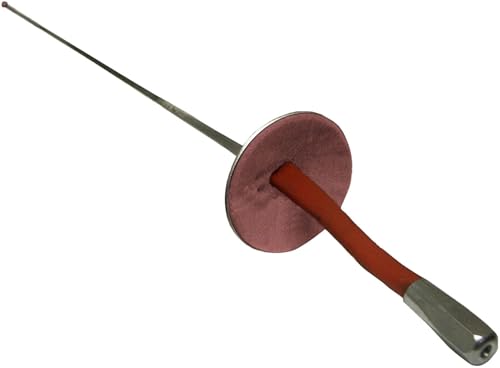
Recommended for: Beginner Fencers and Practice
This practice foil by the brand Pro Fencing is the most affordable option on the list by a fair marigin. It’s a great option for beginners who do not want to invest in more expensive equipment right away.
The foil is lightweight enough for new fencers and for practicing. It comes in a range of sizes for children and adults and options for right and left handed people.
Pro Fencing’s practice foil features a French grip, which is the recommended grip for beginners because it feels natural in the hand.
| Pros | Cons |
|
|
2) Morehouse USA Practice Foil
No products found.
Recommended for: Beginners and Experienced Fencers who prefer French grip
Morehouse USA’s practice foil is another affordable fencing sword option, with a price of only slighter more than the previous sword. This aluminum sword is made in an adult size and features a left handed French grip.
The French grip is suitable for beginners and the lightweight aluminum makes this sword highly maneuverable for any type of practice.
| Pros | Cons |
|
|
3) Pro Fencing Practice Foil with Pistol Grip

Recommended for: Advanced Beginner-Advanced Fencers
This variation of Pro Fencing’s Practice Foil features a pistol grip, which is more ergonomic but may not be the best option for brand new fencers. Italian, German, Russian, and Belgian Visconti pistol grip options are available in a range of sizes.
The foil also has left and right handed options and comes in a few different child and adult sizes.
The light weight of this sword makes it ideal for practice. Although it features a pistol grip, the lightness of this sword makes it appropriate for advanced beginner and intermediate fencers.
With a price only slightly higher than the previous models, this is another great sword that won’t break the bank.
| Pros | Cons |
|
|
4) Blade Electric Fencing Foil
No products found.
Recommended for: Intermediate-Advanced Fencers
This electric fencing foil by the brand Blade is ideal for more experienced fencers. It is lightweight, well balanced, and has more features than the more basic swords described above.
With the highest price on the list, this option is a bit more expensive than others on the list but is still a reasonably price option for an electric foil.
With left and right handed options, several grip sizes, and several blade lengths, this foil is the most customizable choice. Being an electric foil, this sword is ideal for use in competitions.
| Pros | Cons |
|
|