

List of the Best Swordsmen & Most Famous Swordsmen in History [Updated]
Swordsmanship was an important feature of masculinity in many cultures in history. In times of frequent warring and combat, both sword making and wielding allowed populations to defend against outside threats and individuals to prove themselves capable and respectable.
We generally think of swordsmen in a medieval European context, or perhaps as brave and elusive samurai of Japan.
While several of the swordsmen discussed here are of these times and places, we will also look at great fencers and fighters of the Age of Enlightenment, when good swordsmanship was still very much a sign of accomplishment and masculine bravery.
The following are some of the best swordsman in history, in date order. Some are well-known, while others are shrouded in mystery. Each swordsman has uniquely contributed to the history of swords and fighting, as teachers, writers, military leaders, and more.
1) Johannes Liechtenauer
(1300-1389, Germany)
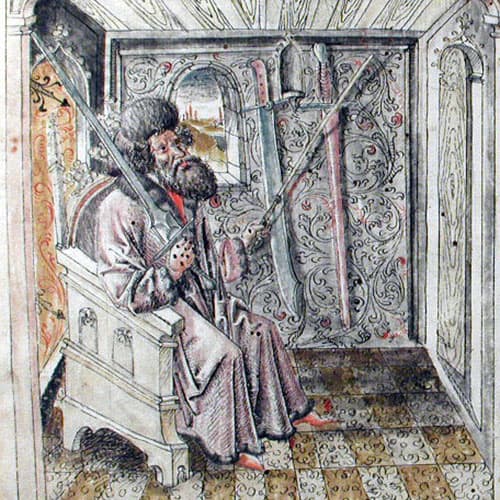
Johannes Liechtenauer was a highly accomplished German swordsman whose fighting style influenced the fencing tradition in Germany. He is known for his calculated blows and maneuvering techniques.
In addition to being a powerful fighter, Liechtenauer taught his skills to many others who would go on to be master fencers.
The teachings of Johannes Liechtenauer were recorded by his students in a mnemonic poem called the Zettel. This summarized their teacher’s words of wisdom and aided students after Liechtenauer’s passing in 1389.
This poem is widely considered cryptic, with obscure explanations of longsword fighting and other maneuvers. The poem is both a learning device for Liechtenauer’s students, and a sort of hidden message, intended only for those who knew his teachings.
2) Sigmund Ringeck
(Before 1470, Germany)


Sigmund Ringeck was a master German fencer who lived around the time of Johannes Liechtenauer. Not much is known of his life, but his contributions to writings on medieval fencing have allowed scholars to better understand fencing and swordsmanship in the middle ages.
Ringeck is remembered for his commentary on the writings of Johannes Liechtenauer, who may have been Ringeck’s teacher. Liechtenauer’s writings on fencing are valuable to scholars today, but many of his comments and verses are quite obscure to modern readers.
Ringeck clarified Liechtenauer’s descriptions of fencing and added much-needed commentary to many of Liechtenauer’s instructions on the longsword, mounted combat, armored combat, and other fighting topics.
Sigmund Ringeck’s writings on medieval swordsmanship are some of the clearest of his time. He writes with the beginner in mind, starting with the basics and going step-by-step to carefully explain complicated fencing topics.
Ringeck stands out as not only a master fencer, but a superb writer and careful teacher.
3) Fiore dei Liberi
(1350-1410, Italy, France, Germany)
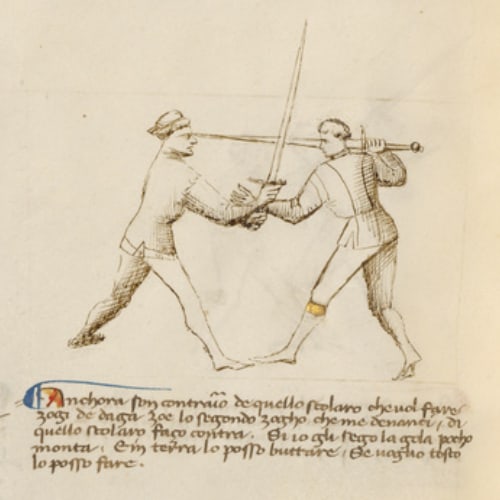
Fiore dei Liberi was an Italian fencing master and teacher. He learned under a number of German and Italian masters within the Holy Roman Empire.
He participated in five duels for his honor and taught his art in royal houses across Europe. He is widely considered one of the best fencers and teachers in European history.
While a highly skilled swordsman and instructor, Fiore dei Liberi is most well-known today for his treatise on fencing called The Flower of Battle. This manual is one of the oldest surviving guidebooks on the topic of fencing and swordsmanship and provides insight into medieval fighting styles and practices.
In the manual, Liberi lays out some of his go-to fighting sequences and organizes the treatise in a way that is useful for students and masters. Four illuminated manuscript copies of The Flower of Battle exist to day and their illustrations can be viewed online.
Fiore dei Liberi fought and studied fencing for over 50 years before writing The Flower of Battle and other works that unfortunately did not survive through the centuries. He truly is an authority on medieval European swordsmanship.
4) Kamiizumi Nobutsuna
(1508-1577, Japan)
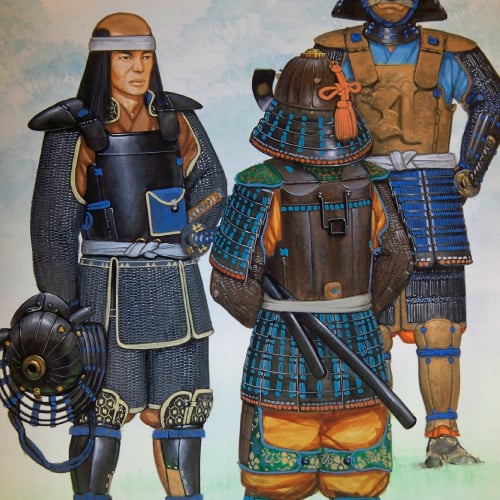

Kamiizumi Nobutsuna is one of the celebrated samurai of 16th century Japan. He is known for improving upon the kage-ryu sword fighting style that was popular at the time.
Like other swordsmen, Kamiizumi Nobutsuna dedicated part of his career to instructing others in fighting and defense. He opened his own school called Shinkage-ryu, or New Shadow School. His teachings emphasized defensive, protective style fighting that incorporated many low, stealthy stances.
Nobutsuna is remembered as a leader in the development of Japanese swordsmanship schools, known collectively as kenjutsu. The fighter’s style transferred to his many gifted students and schools of swordsmanship across Japan came to know his style through them.
5) Sasaki Kojiro
(1583-1612, Japan)
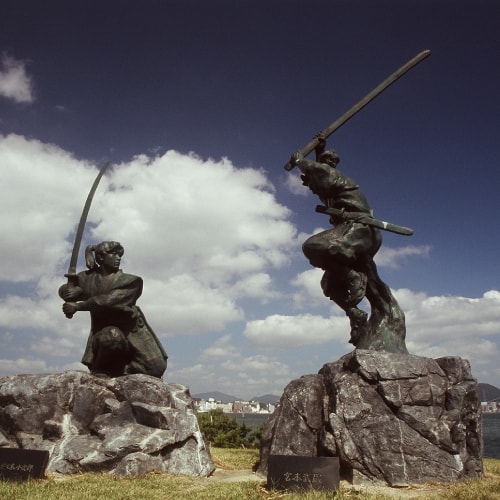
Born just after the great Kamiizumi Nobutsuna, Sasaki Kojiro was another samurai of the Sengoku period of Japanese history. Sasaki Kojiro is widely considered the most skilled swordsman ever and is known for his fast, downward striking style.
Sasaki Kojiro became a master of the Chuyo-ryu school, and was gifted with the use of the nodachi, which was a longer version of the katana.
Although Kojiro is remembered for his excellent fighting skills, he was ultimately defeated in a duel with the great Miyamoto Musashi, who is described below.
Kojiro and Musashi were longtime rivals leading up to their famous duel. This duel has become legend over the centuries, with many versions of the story and little evidence backing up a number of claims. Some versions of the story claim that Musashi arrived to his duel with Kojiro three hours late and a furious Kojiro rushed into fighting.
While we will never know the true details of Kojiro’s final duel, he is remembered for his mastery of the sword, his contributions to Japanese sword fighting schools, and his many signature sword fighting techniques.
6) Miyamoto Musashi
(1584-1645, Japan)
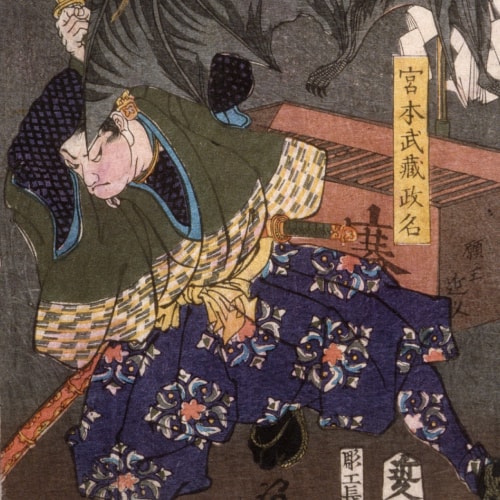

Miyamoto Musashi was a contemporary of Sasaki Kojiro and an extremely skilled fighter. He was born in the Harima Province of Japan and fought for the Toyotomi clan.
Miyamoto Musashi purportedly fought and one his first duel at the age of thirteen and would go on to win 60 other duels in his lifetime.
The greatest of these is considered by many to be his duel with Sasaki Kojiro, in which Miyamoto Musashi is said to have fought using only a wooden oar and won.
Musashi is also remembered for perfecting a two blade fighting technique that would be replicated by contemporaries.
Miyamoto Musashi eventually retired from fighting and became an ink painter and writer. His famous Book of Five Rings describes a plethora of samurai tactics, fighting strategies, and philosophy.
7) Donald McBane
(1664-1732, Scotland)

Donald McBane lived a very colorful life as a professional soldier, tavern keeper, and brothel owner in the late 17th and early 18th centuries. He was an extremely accomplished swordsman who claimed to have participated in over 100 duels throughout his lifetime.
McBane opened his own fencing school where he taught students techniques he learned in his years as a soldier and other skills of his own invention.
His fighting style was powerful and assertive. One of his famous moves, “The Boar’s Thrust,” involved dropping to one knee and jabbing one’s sword upward for an uppercut blow.
Not one to retire, Donald McBane continued working as a prize fighter well into his 60s, despite having accumulated dozens of wounds in his time soldiering. Late in life, McBane completed an autobiography of his time as a swordsman and a fencing manual entitled The Expert Sword-Man’s Companion.
8) Joseph Bologne
(1745-1799, Guadaloupe, France)

Joseph Bologne was the son of a plantation owner and an African slave and was born in Guadeloupe in 1745. Bologne moved to France and spent most of his life there. Despite facing discrimination and even two assassination attempts in a time when many did not think highly of mixed-race people, Joseph Bologne found great success as a violinist and fencer.
He regularly participated in fencing matches attended by royalty from across Europe. While they likely came to see him out of curiosity for his appearance and parentage, the royals left these matches impressed by Bologne’s skill and respectful of his accomplishments.
During the French Revolution, Joseph Bologne served as a colonel in the first all-black regiment in Europe.
Someday my name is going to be on this list.
i wish you luck
but you’ll have to go through me first
First get past the widow
Then you know nothing about the man who had won 200 battles and he has never been defeated in his entire life. His Name Is KHALEED IBN ALWALID, they call him “THE SWORD OF GOD”, you can read about him if you want 🙂
I love these comments. you all have my respect and thank you for the bit of knowledge Yassin!
Research about Lotf Ali Khan Zand, he was the king of Iran before the Qajar dynasty, that is, he ruled for 6 years in 1789-1794 AD, he had the ability to use two swords at the same time, and as the last swordsman of the East. He became famous, I must say that he became famous before he was 20 years old, to be more precise, he became famous at the age of 16. Lotf Ali Khan Zand was killed by Khwaja Agha Mohammad Khan Qajar at the age of 22.
MUSASHI NEEDS TO BE 1 YOU GUYS DON’T KNOW HISTORY OR ANYTHING ABOUT MUSASHI – SAMA !!