

List of Best Flint Knapping Books For Beginners & Experts

Flint knapping is a very unique and ancient trade. It is the art of shaping stones in order to create useful stone tools through a process called lithic reduction.
Some of these stones are made of flint, chert, obsidian, which feature the conchoidal fracturing properties needed to create such tools.
Flint knapping has been around for so long that ancient civilizations regularly created tools through this process in order to hunt for food or defend themselves from impending danger.
You can learn more about this ancient art by reading books on the matter and starting to work on your own flint knapping projects. There are a variety of books well-suite to meet different skill levels.
The books featured below are some of the best flint knapping books for people who would like to learn the techniques and tools needed to jumpstart their own projects.
1) Flint Knapping
Recommended for: Beginners
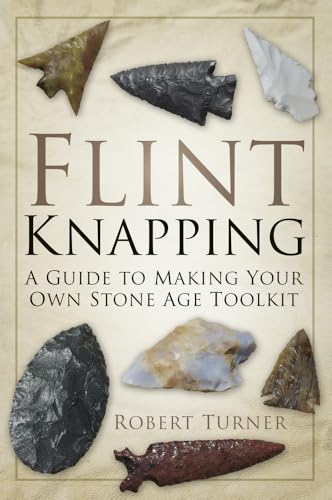
Flint Knapping is a book written by Robert Turner and described on its cover as, “[a] guide to making your own Stone Age toolkit,” and that is exactly what it does.
This book offers an amazing journey to its readers. The author describes the origins of flint tools alongside a practical explanation of how to create your own.
The flint tools discussed in the text range from the Palaeolithic to the Bronze age, making this a fantastic read for both people who are interested in flint knapping as well as people interested in historic artifacts.
The variety in the types of tools discussed from different ages is a great way to showcase the similarities and differences of these historic tools. Some of the designs included in the text are more complex than others, posing a challenge to the readers who are following along with the book.
The practical explanation of how to create these tools is perfectly geared towards beginner flint knappers. However, flint knappers of higher skill levels may still benefit from the background information regarding the types of flints and their roots.
| Pros | Cons |
|
|
2) Flintknapping: Making and Understanding Stone Tools

Recommended for: Beginner to Advanced
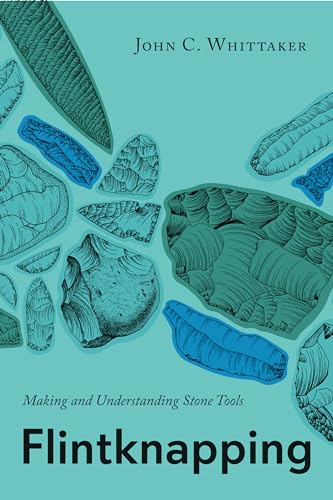
Flintknapping: Making and Understanding Stone Tools is a comprehensive flint knapping handbook written by John C. Whitaker. This book details the process of flint knapping at different skill levels from an archaeological perspective.
The valuable information regarding the types of tools and techniques needed to create different types of flint knapping tools is sure to help and inspire both amateur and advanced flint knappers. The techniques that the author discusses include step-by-step instructions for how to build your own stone tools.
The information that the author provides is also accompanied by a variety of diagrams and illustrations that help the reader further understand the ideas present in the text. These drawings facilitate the process of following along with each project and skill discussed in the book.
Overall, this is a fantastic book for flint knappers of the beginner to advanced skill levels due to the breadth of information on flint knapping techniques. In addition to this, the text is a great read for those interested in the history of making stone tools, lauded by readers as the “best book on the subject.”
| Pros | Cons |
|
|
3) Old Tools-New Eyes: A Primal Primer of Flintknapping

Recommended for: Beginners
Old Tools-New Eyes: A Primal Primer of Flintknapping is a great flint knapping book written by Bob Patten and intended for people of all different types of professional backgrounds, occupations, and interests. Some of the occupations that would benefit from the information provided in this book are archaeologists, collectors, students, and, of course, flint knappers.
The most impressive aspect of this book is also the breadth of research held within its bounds. The author presents clear and concise archaeological evidence and computer modeling results that indicate a lot about how ancient North American hunters would use tools such as the Clovis and Folsum fluted spearpoints in difficult environmental situations.
The text describes the details of how the stone shapes, points, marks, and indentations could tell you a wealth of information about their history and how they was created. Some of these physical clues can inform you of the type of the technologies that went into making such shapes.
Students will be able to learn a lot of about the origins of flint knapping and the circumstances that surrounded the people who actually made a particular tool in ancient times. Those interested in learning about flint knapping will be able to garner valuable information from the author who is a master flint knapper himself.
Patten even describes how to control fracture through a detailed process that is accompanied by helpful illustrations and pictures. The way that he presents this information is very unique and well thought out. This is a fantastic resource for those trying to get a solid understanding of flint knapping, its importance to past civilizations, and what we can learn from it in the modern-day.
Therefore, this book is ideal for beginners and the types of people with the occupations and interests described above.
| Pros | Cons |
|
|
4) How to Make Your Own Stone ARROWHEAD

Recommended for: Beginners
How to Make Your Own Stone ARROWHEAD written by F. Scott Crawford is a perfect book for beginner flint knappers looking to start making their own stone tools. This book contains detailed and complete instructions about making your own stone arrowhead as described in its title.
This book clearly presents its message and useful directions both through text and helpful visual aids, such a as photographic examples and illustrations. These visual aids are provided for each step described in the instructions and definitely facilitates the do-it-yourself process for those following along with the book.
Since this is a very short read, many will find that the information can be learned and replicated very quickly. All it takes is some additional practice to improve your skills and techniques once you understand the information. This book is easily accessible in both a paperback and an e-book format for those who would like to start their flint knapping projects straight-away.
| Pros | Cons |
|
|
5) The Art of Flintknapping
.jpg)
Recommended for: Beginner to Intermediate
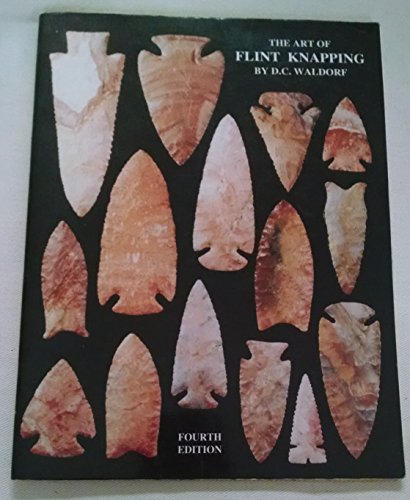
The Art of Flintknapping by D.C. Waldorf is a very easy-to-understand book that will tell you all of the basics of flint knapping. These basics include the types of tools you will need to start working on projects, the raw materials you need to work on, and the flaking techniques you can learn implement to design your stone tools.
The author is clearly very knowledgeable in the trade and provides a lot of important information for beginners who would like to understand and learn more about the trade. The book contains helpful black and white photographs to demonstrate the flint knapping techniques and skill discussed within the text.
The style of writing is very easy to comprehend and very simplified. This writing style allows the reading to easily comprehend the content presented by the author and leaves little room for assumptions and guesses.
Since this book mainly covers basic information about flint knapping, it is not recommended for more experienced flint knappers who have already completed multiple related projects.
| Pros | Cons |
|
|
6) Flintknapping: The Art of Making Stone Tools
- Used Book in Good Condition
Recommended for: Beginners
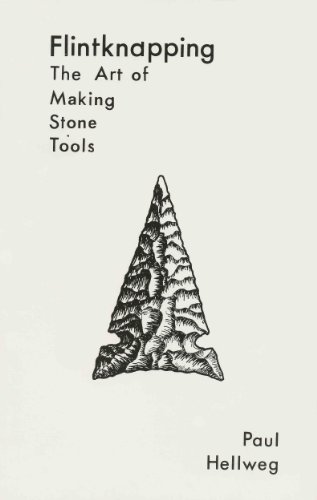
Flintknapping: The Art of Making Stones Tools by Paul Hellweg is essentially a guide about the manufacture of stone tools and arrowheads. The author described all of the necessary items and skills a beginner will need to start making his or her own flint knapping projects.
The basic flint knapping information covered in this book is presented in a very simple and concise manner by the experienced author and writer. This is a great starter book for flint knapping as it covered a wide variety of stone tool types. Some of these stone tools include arrowheads, spearheads, hammers, knives, axes, and other stone artifacts.
This book also implements the step-by-step method of instruction accompanied by useful illustrations of each step. Although the author emphasizes that these techniques and skills will only be learned and improved through hands-on, continual practice, he also believes that the information in this book can be very helpful to kickstart that learning process.
Due to the basic nature of the information presented in this text, this book is ideal for beginners and people who would like to learn more about what goes into making stone tools in general.
| Pros | Cons |
|
|
Please consider adding my new book on flint knapping, thanks.
https://www.amazon.co.uk/Flint-Knapping-practical-Jonathan-Cope