

Different Types of Quenching Oils for Blacksmithing
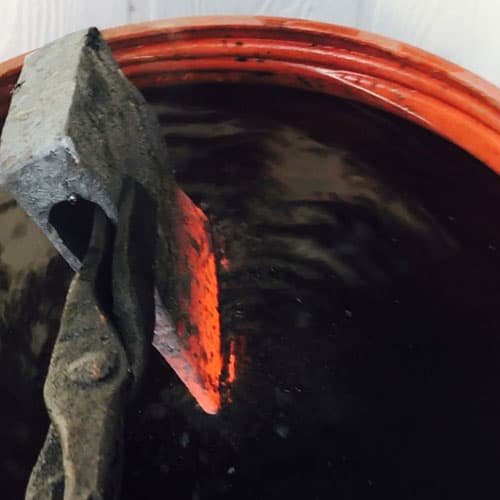
The quenching process is a very important step in the blacksmithing process when working with heated metals. Quenching is a form of rapidly cooling a uniformly heated metal to limit and control the effect that slow cooling has on a metal’s microstructure and, therefore, its metallurgical properties.
One of the common media in which a blacksmithed workpiece can be quenched is oil. There are many kinds of quenching oils available to perform this task, but some may be better than others for certain applications.
The common quenching oils that we will discuss are motor oils, food-grade oils, mineral oils and automatic transmission fluids, and commercial quenching oils. Although the properties of these oils can vary greatly, it is also important to consider their cost, availability, and compatibility with the grade and type steel you intend to quench.
[socialpug_share]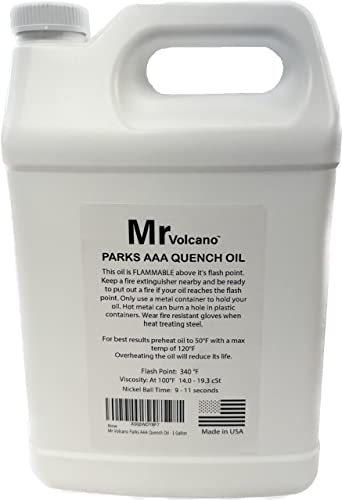
- ENGINEERED COOLING SPEED – AAA quench oil delivers a predictable, medium/medium‑fast quench...
- SAFER, MORE CONTROLLED QUENCH – High flash point (>340°F) and a formulation purpose‑built for...
- CONSISTENT, REPEATABLE RESULTS – Optimized viscosity (14.0–19.3 cSt @ 100°F) and stable...
How Do Oils Work to Quench Metals?
The quenching process is made up of different steps. When a heated workpiece first comes into contact with the quenching oil, a vapor layer forms around the metal as it is completely submerged. This vapor layer is stabilized by different conditions.
The properties of the metal and those of the quenching oil can greatly affect the stability of the vapor blanket surrounding the workpiece. Once the vapor blanket is destabilized, nucleate boiling takes place. This step in the process features the most rapid rate of heat transfer. The molecular composition of the individual quenching oil plays a large role in determining when this step takes place and how fast it is.
Once the process temperature decreases below the oil’s boiling point, the process transitions to the convective cooling step. The cooling rate in this step is heavily dependent on the viscosity of the quench oil, which, in turn, is dependent on its purity. Below is a great video showcasing the quenching process in two different media, both oil and water:

As previously mentioned, the properties of quenching oils can vary greatly based on the type of oil being used. This variation affects the way in which the oil quenches a metal. Some of the effects it can cause are manifested as structural changes to the work metal that are more favorable at lower temperatures, like phase transformations.
Phase transformations could increase the density of a metal’s crystal lattice, causing it to harden. The hardness of a metal can determine how pliable or brittle it is, making this an important characteristic to be able to control.
Is There Actually a Best Quenching Oil?
While there may not be an overall best quenching oil type, there are quenching oils that may be better-suited for quenching certain types or grades of steels in a particular application than others. This factor is very important to consider once you understand the characteristics of the metal you intend to quench.
Since the conditions of the quenching process are not universal to all metal types, it makes sense that the oils used for quenching are chosen based on the properties unique to the particular steel or steel alloy being quenched.
Steels and alloys undergo quenching at different starting temperatures and cooling rates to promote the uniformity and quality of the finished product. One of the common metal and oil combinations are mineral oils and oil-hardened steels, because it acts as an intermediate-rate quenchant.
Considerations When Buying Quenching Oils
1) Oil Quenching Costs

The factor at the forefront of many blacksmiths’ minds when choosing a quenching oil, is its cost. This is a very important and valid factor to consider, because cost can be affected by the effectiveness of a particular oil in an application or simply by the availability of the oil.
If you are a beginner blacksmith who would just like to get started with some projects involving the quenching process in oil, it may be more prudent for you to start using cheaper oils to practice and refine your technique.
If you are an advanced blacksmith trying to find the perfect quenching oil for your application, regardless of the cost, it would make more sense to pick the ideal oil type for your project – often in the form of commercial quench oils.
2) Oil Quench Rate and Speed
The other physical properties of quenching oil can also have a significant effect on how efficient it is at quenching a particular steel type. Some metals require certain quenching speeds to prevent any cracking or distortion in its structure.
As briefly discussed, the viscosity of oil can accelerate or decelerate convective heat transfer step in the quenching process, also referred to as the quench rate. The lower the viscosity of a particular oil, the faster the rate of heat transfer is. It is also important to note that the viscosity can also be affected by the degradation of the oil that takes place as it is used in the quenching process. This degradation is characterized by the presence of oxidation by-products in the oil, which can also cause an increase to the overall fluid’s viscosity and lower the rate of heat transfer.
Another physical property that can affect the quench rate is the water content of the oil. This property also affects the look and quality of the finished workpiece if it does not cause a fire in combination with the oil. Since water has very different properties from oil, more than two percent of the water content in a quenching oil could create irregularities on the surface of the workpiece and a dangerous combination. This is a form of contamination that can greatly alter the rate of heat transfer on different parts of the metal’s surface due to thermal gradients.
3) Environmental Impact of Oils
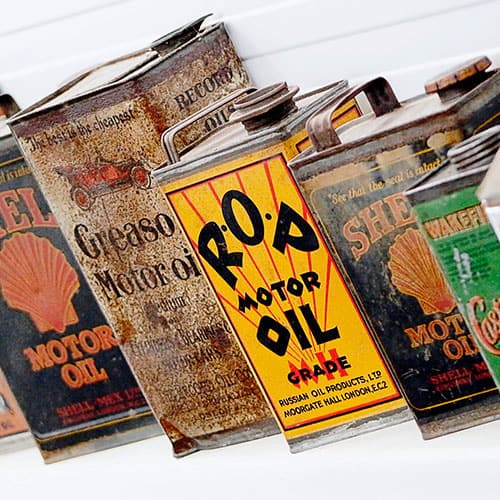
The environmental impact that a quenching oil has is a very important factor to consider when choosing a quenching oil. This factor not only impacts the way in which you dispose of the oil, but the amount of times that you can re-use a quenching oil and get the most out of your supplies.
For example, premium quenching oils can last years before needing to dispose of them. In large-scale settings, oil filtration and circulation systems are currently used to optimize the use of quench oil due to the increasing costs of oil and its proper disposal. The recyclability of quench oils can decrease your carbon footprint. Some oils can even be reclaimed as bio-fuels, further optimizing their use.
Different Types of Blacksmith Quenching Oils (Comparison)
1) Motor Oils
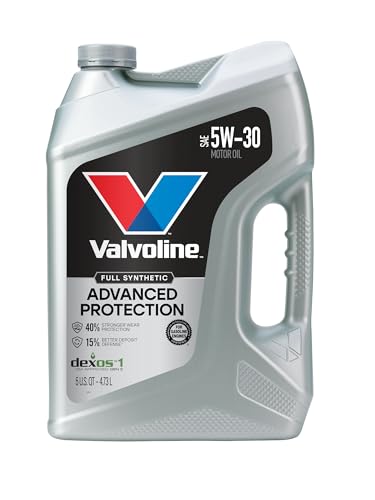
- Advanced protection against the four main causes of engine breakdown: wear friction heat and...
- Delivers 40% stronger wear protection than industry standards to reduce friction and improve fuel...
- Provides 15% better deposit defense vs. industry standards, keeping engines cleaner for smoother...

Motor oils are a common type of quenching oil used in both blacksmithing and bladesmithing applications. New and used motor oils can be used for quenching and are both widely available. New motor oil is typically cheaper to use than commercial quenching oils.
Used motor oil is oftentimes free or easy to obtain, but it can contain a few contaminants from being used in a vehicle. Unfortunately, both new and used motor oil have additives that can release toxins when the hot metal workpiece comes into contact with the oil during the quenching process. These toxins typically give off an undesirable smell during quenching. It is always wise to avoid inhaling these toxins and to wear the proper safety gear for your application.
Quenching with motor oil should be done in a space with enough ventilation. Due to the contaminants found in motor oils, a lot of blacksmiths who use it, find that there is a thin dark film on their finished workpiece after quenching.
| Advantages | Disadvantages |
|
|
2) Food-Grade Oils

- HEALTH BENEFITS: AVO Organic Canola Oil for deep frying is minimally processed, and NO harmful...
- CONSISTENT QUALITY YOU CAN TRUST: Quality & Safety are top priorities in every step of our...
- BUY WITH PURPOSE – ENVIRONMENT: Besides producing healthy vegetable organic oil & vinegars, AVO is...
There are many food-grade quenching oil options available to use for blacksmithing. Among these options are vegetable, peanut, and avocado oil. Some commonly used vegetable oils are canola, olive, and palm kernel oil. Vegetable oil is very cheap and comes from renewable sources. They are biodegradable and can even be reclaimed as bio fuels. Vegetable oils have better impact energy values when used as a quenching oil. This characteristic allows them to increase the toughness of the workpiece.
The trade-off with these oil types is the decreased hardness. Peanut oil and olive oil could also be used for similar applications, but they are typically more expensive than common neutral oils.
| Advantages | Disadvantages |
|
|
3) Mineral Oils & Automatic Transmission Fluids
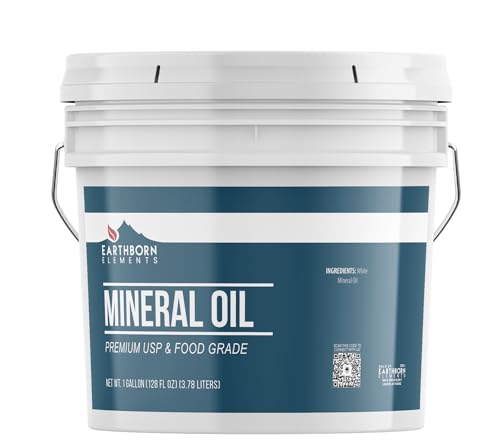
- Earthborn Elements Mineral Oil in a resealable bucket
- Clean, protect, condition, and restore wood surfaces
- Colorless, Tasteless & Odorless
Mineral oils and automatic transmission fluids are a suitable alternative for motor oils. These types of oils actually do not contain the additives that motor quenching oils are infamously known for in blacksmithing. If you do not have access to mineral oils, baby oil is another great alternative for them, it simply contains an added scent.
Mineral oil quenchants work great with steels that require a fast quench rate and oil-hardened steels. Mineral oils generally have greater cooling capacities for steel alloys. Their efficiency in the quenching process increases their overall cost.
The environmental impact of mineral oils is not very good, as they are not biodegradable. If these oils are heated to very high temperatures, there is a possibility that dangerous aromatics will start to build up and release toxins into the air.
| Advantages | Disadvantages |
|
|
4) Commercial Quenching Oils
- ENGINEERED COOLING SPEED – AAA quench oil delivers a predictable, medium/medium‑fast quench...
- SAFER, MORE CONTROLLED QUENCH – High flash point (>340°F) and a formulation purpose‑built for...
- CONSISTENT, REPEATABLE RESULTS – Optimized viscosity (14.0–19.3 cSt @ 100°F) and stable...
Commercial quenching oils are specifically made to be used in the quenching process, as their name suggests. There are a wide variety of commercial quenching oils available to accommodate the different types of steels and steel alloys to be quenched. They are composed in such a way that different commercial quenching oils feature properties that can cause slow or fast quenching rates.
Since commercial quenching oils are made for the purpose of quenching, they are typically the most expensive quenching oil type available. They are not easily accessible at general stores and have higher costs than common oils.
| Advantages | Disadvantages |
|
|
Very informative, thank you
Fantastic article, very well explaind, with a common language, and very professional. Me has a
grandson of germann black simth, and had watched my grandfater doing this job, highly
apreciated the way it is explaind. PS.:I’m not a blacksmith(yet, but on the near future.
Generally speaking, motor oil is too thick to quench steel fast enough. Automtic transmission fluid at 120 degree F works well. Warm oil is faster than cold oil but don’t let it get above about 160 as its cooling rate goes down and flammablity goes up. The light mineral oil they fill electrical transformers with is very good. Use it at about 100 F. (Do not try to steal coolant from old transformers , as it might contain toxic PCB) Horse-drenching oil seems similar, but i have not used it much.
I know Sunflower oil works well with 5160 and 1095 but I heard Parks 50 is top shelf but even for a gallon ,by time shipping it will be $90-$100 per gallon..BRUTAL!!!! I recently got a gallon of 2 cycle oil at a home liquidation..Is meant low viscosity due to burn ing once mixed but I wonder if it is flammable alone? Might run test..I wish Parks 50 was available in my area, would gladly pay $50 because it lasts I heard (some smiths say a decade and still quenching fast..Just is not readily available so ship cost added on $$$$$….Sunflower oil is where I will probably end up as I know it works for what material I am using..
At McMaster cart you can get 5 gallons of 11 second quench oil for about 80 plus shipping. Pretty good deal. Not quite as fast as parks 50 but works well for me.
Just ordered a 5 gallon of the 11 second quench. Thanks for the info
A smart shopper can get Parks 50 for $44.83 a gallon on Amazon
I use chainsaw bar oil works great
Just starting to make knives
Old engine oil has worked for me for many many years, filtered once a year, I add thinner oils to get the viscosity I like, vegetable or baby oils mix well, 👍
+1 on old engine oil, I use it on a lot of O-1 knive blades and die tooling, in the shop.
is it possible to use lard/animal fat or butter?