
Forged Weapons of the Middle Ages That Aren’t Swords [Updated]
The medieval sword is arguably the most famous weapon in history. Books, movies, video games, and historical reenactments have convinced most of us that the sword was the most common and important weapon of this time period.
However, dozens of other weapons were used by soldiers during the Middle Ages for various purposes.
The advancement of plate armor is an important factor to consider when studying forged weapons of the medieval period. As armor technology improved, the types of weapons altered to be more effective in battle.
Weapon usage also varied depending on the type of warfare required. Close combat weapons, siege weapons, and ranged weapons developed to meet the needs of soldiers in different fighting scenarios. While swords proved highly effective in close combat, they could not be used in other types of fighting.
The following list does not contain swords, knives, and daggers, but instead focuses on other forged medieval weapons. They are categorized according to their construction and use on the battlefield.
Blunt & Close Range Weapons
Swords were highly effective in close combat, but many other options existed for medieval soldiers. The following are blunt and close range weapons that would have done serious damage to a soldier’s body, armor, and horse.
1) Mace
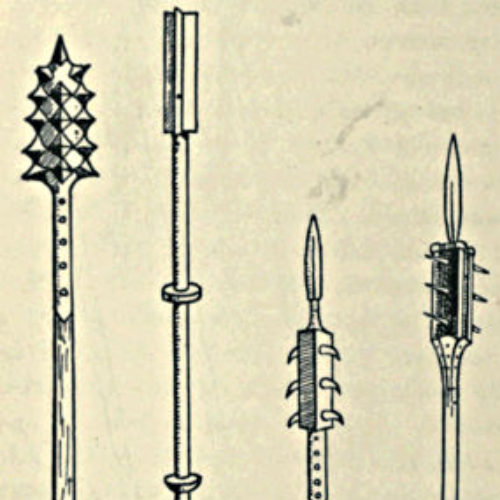

The mace is one of the simplest weapons on the list. Developed from the club, a medieval mace was made up of a handle with a heavy head.
Maces featured radial symmetry to allow for deadly blows from any angle. While most mace heads were crafted from iron, other materials like copper, bronze, and stone were also used.
The sizes and shapes of maces varied widely, as shown in the illustration above. Regardless of the shape, maces could damage plate armor and cause major injuries without puncturing the armor.
Maces were common due to their simple design. They were widely used in peasant rebellions and major conflicts. Both foot and cavalry soldiers wielded maces.
2) Morning Star


The morning star is one of the most menacing-looking medieval weapons. It resembled a spiked club and featured a long spike at its end with many smaller spikes radiating from a central ball.
Morning stars usually had wooden handles and could measure up to 6 feet in length.
This weapon became widespread in Europe by the 14th century. Both cavalry and foot soldiers carried morning stars. Variations of the weapon were crafted for professional soldiers, peasant militias, and ceremonial uses.
3) War Hammer


Medieval war hammers closely resembled the everyday tool, but featured a long handle and spike for stabbing. Some war hammers could be as long as a halberd, but many were closer in size to a mace.
War hammers reached their peak popularity in the 14th and 15th centuries as a response to armor advancement. New forging technologies allowed smiths to create surface hardened steel that withstood the blows of weapons.
The war hammer’s long spike could cause damage even without puncturing this new type of steel. It could also be used to catch the arms and legs of enemies and the reins and legs of horses.
Pole Arms/Shafted Weapons
Pole arms are defined as long shafts with fighting weapons on their ends. Commonly called staves in the Middle Ages, pole arms varied widely in their design. Most were effective for cutting and thrusting maneuvers.
As plate armor advanced, pole arms also became more sophisticated. Later versions of the stave featured large spears for thrusting as well as blunt ends, hooks, and other features.
4) Spear

.jpg)
Spears are some of the oldest weapons in human history and were important in the Middle Ages. Medieval spears featured wooden shafts and sharpened iron heads. Heads could be forged in triangular or leaf shapes.
Spears were the main weapons of common soldiers in the early Middle Ages due to their simple and cheap design.
Most medieval spears measured 6-8 feet in length and were used by both cavalry and infantry soldiers. European soldiers rarely used spears as projectile weapons. Instead, spears served as thrusting weapons.
While we associate the Vikings and Anglo-Saxons with swords, they actually relied heavily on spears as their everyday weapons.
By the 14th century, the humble spear fell out of favor with most armies in Europe. Other pole arms such as the ones described below could be used for both cutting and thrusting maneuvers, and were therefore more effective in battle.
Spears served as the main inspiration for lances.
5) Guisarme
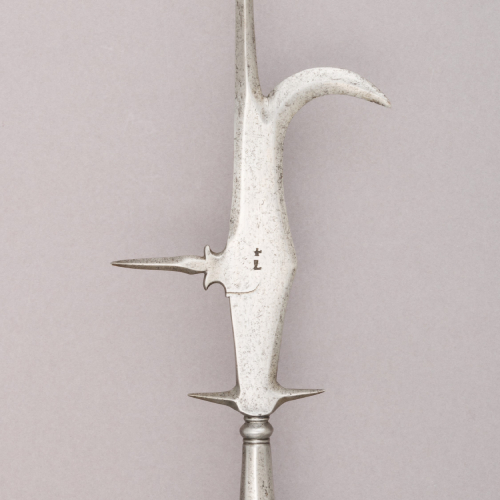

Guisarmes were used between 1000 and 1400 and are similar to other pole arms described below. The defining features of a guisarme are its sharp spear for puncturing armor and its large hook.
The hooks of guisarmes were used to drag soldiers off of their horses. They could also be used on the legs of horses to force cavalrymen onto the ground.
6) Lance

Thanks to movies, tv shows, and Renaissance fairs, one of the most famous medieval weapons is the lance. Originally developed based on the design of spears and javelins, the medieval lance saw battle beginning in the 11th century.
Lances were most effective in full-gallop charges. Soldiers held their lances under their arms and charged in a closed rank formation towards the enemy.
This maneuver proved most deadly against infantrymen, archers, and opposing cavalry.
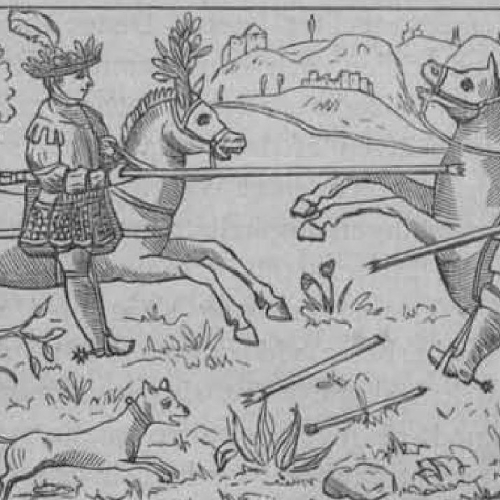
The lance that most of us think of today is an altered version of a lance used for combat. Lances used for tournament jousting were blunted to prevent major injuries. The shaft of the lance was hollow to encourage breaking upon impact.
Most tournament lances measured around 4 meters. The above illustration features a blunted lance and a broken lance.
7) Pikes

.JPG)
Although associated with Renaissance soldiers like the German landsknecht, the pike was actually used from the early Middle Ages to around 1700.
This is the largest of all medieval pole arms, measuring up to 22 feet in length. Pikes had a simple construction made of a wooden pole and iron spearhead.
Because of their length, pikes were crafted from dense wood. Pikes could be unwieldy due to their size and length, but an army of skilled pikesmen were highly feared.
In the Middle Ages, urban militias and peasant groups most commonly wielded the pike.
8) Fauchard


The fauchard is commonly associated with the 11th to the 14th centuries. This quintessential medieval pole arm was made up of a long handle with a blade attached.
The curved blade of the fauchard could vary in length, but most poles reached 6-7 feet long. The blade was sharpened with a single edge on its concave side. This made the fauchard blade similar to the scythe.
Because of its single edge, weapons producers equipped the fauchard with an additional lance point to inflict further damage. The fauchard pictured here features several points of varying sizes.
9) Glaive
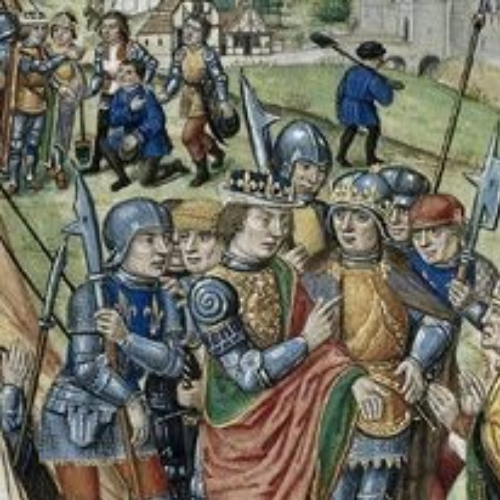

The glaive was another pole arm that featured a single-edged blade. The blade resembles a modern kitchen knife and could measure up to 18 inches in length. The pole of the glaive could reach 6-7 feet long.
Because of this weapon’s versatility, the glaive was used by both cavalrymen and foot soldiers.
Glaives can be seen in medieval artwork such as the image above. This illustration dates the late 1400s. A famous illustration of a glaive is featured in the Maciejowski Bible and dates to the 1200s.
10) Halberd
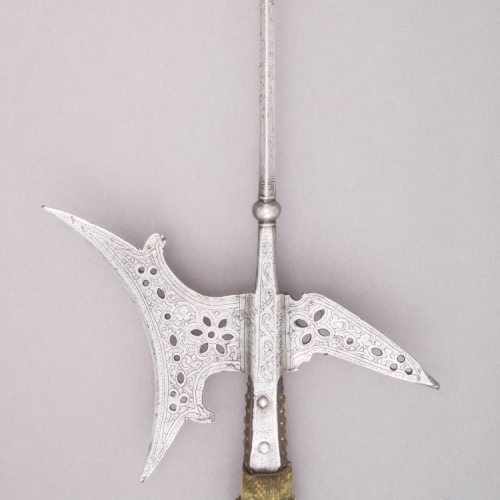

The halberd was another popular pole arm of the later Middle Ages. This weapon reached its peak use in the 14th and 15th centuries.
Although similar to the pollaxe described below, the halberd featured a hook rather than an additional spike. This hook was used to pull soldiers off of their horses, or to attack the legs of the horses themselves.
An axe blade and spike allowed a soldier to perform chopping and thrusting maneuvers.
Although halberds lost their appeal as a weapon after the 15th century, they are still incorporated in ceremonial events to this day.
11) Pollaxe
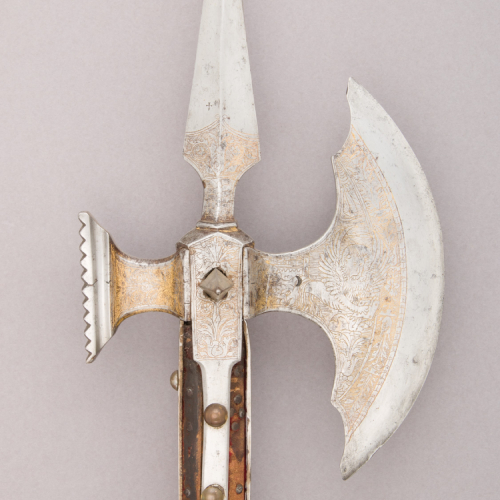

Pollaxes reached their peak popularity between the 14th and 16th centuries. These pole arms were a favorite of foot soldiers for their versatility and deadly features.
The head of a pollaxe featured a spike at the end for thrusting, an axe blade on the front, and another spike or blunted piece for impact with armor.
The pollaxe shown here dates to the 1470s and was forged from iron, steel, brass, and gold.
Ranged Weapons
Medieval ranged weapons include axes, bows, and arrows. While close-range weapons are commonly associated with knights and other medieval soldiers, ranged weapons allowed armies to effectively fight from a distance.
12) Francisca
.jpg)
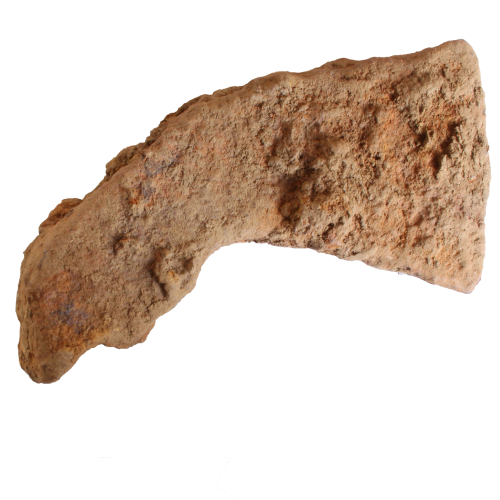
Franciscas, or throwing axes, were the favorite weapon of the Franks and Anglo-Saxons between 500 and 700 AD. While similar to modern throwing axes, franciscas featured heavily curved axe heads such as the one shown above.
Measuring an average of 5-6 inches in length, the unique shape and size of francisca axe heads allowed them to cut through chain mail.
The shape also made the axes unpredictable upon hitting the ground. Axes could rebound off the ground in any direction and cause injury to enemy legs, shields, and weapons.
A skilled francisca thrower could launch the weapon up to 40 feet.
13) Longbow & Arrows
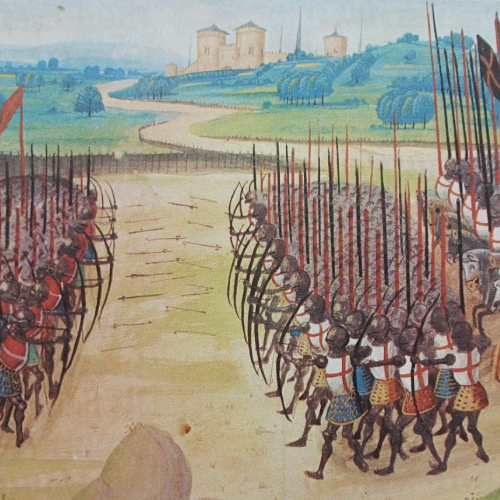

The medieval longbow was considered one of the most deadly and effective weapons an army could possess. Often called “the machine gun of the Middle Ages,” a skilled archer could shoot with lethal accuracy and speed.
Longbows were used with much success by English and Welsh soldiers during major conflicts like the Hundred Years’ War. The longbow allowed for English victories in several key battles of this war.
Although equipped with 60-70 arrows for most battles, archers relied on the help of small boys to resupply. Boys would run new arrows to longbow men in the middle of battles.
Longbows and their arrows were relatively simple and quick to make, which allowed English armies to stock up on these weapons. Because of their size, arrowheads could be forged efficiently by skilled blacksmiths.
great to watch this types of informations on swords from the viking area