
List of Viking Warrior Types & Social Status [Updated]
The Vikings are commonly thought of as purely warriors and raiders. Historical documents from the Viking Age that tell of this fierce group were written not by the Vikings themselves, but by those who were often the victims of raids and violence.
Because of this, much of what we know about Viking warriors and military campaigns is skewed. While it is true that the Vikings fought and raided areas in Europe, not all of their time was spent wreaking havoc.


Myths surrounding specific types of Viking warriors also warp our understanding of how the Vikings participated in battle. The berserker is one such category of warrior that is oftentimes misunderstood.
The goal of this article is to provide a brief but accurate picture of life as a Viking. We examine the social structure of the Vikings and the influence it had on warriors. The article concludes with an overview of some elite Viking warrior groups.
While “Viking” is a modern name and not always preferred, we will continue using it in this article because of its familiarity with most readers.
Social Structure and Status in the Viking Age
.jpg)
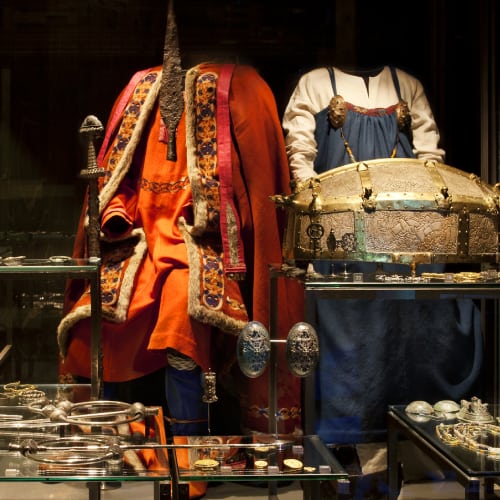
Like other societies in the early medieval world, the Vikings lived in highly stratified culture. During much of the Viking Age, society was divided into three main classes.
The jarls were the highest ranking class for several centuries. They held regional power and controlled petty kingdoms. Jarls can be compared to earls.
Karls made up the majority of Vikings society and lived under the rule of jarls. Karls were Norsemen living in freedom. They worked as farmers, carpenters, blacksmiths, and fishermen.
The final and lowest class of people were the thralls. These slaves had no freedom and very limited mobility within the social hierarchy. Most people were born into this class but others became thralls after losing assets.


By the end of the Viking Age in the 10th and early 11th centuries, kings took over much of the power of the jarls. Kings controlled much larger territories and the jarls worked under kings to control regional lands.
It is important to note that the social class system described here is related to Vikings in Norway and surrounding areas. Interestingly, the social structure of far-flung territories like Iceland and Greenland had much more democratic social rules.
Vikings in these areas met to discuss issues and resolve conflicts. While a general hierarchy still existed, people of all occupations and backgrounds had more of a voice within this alternate system.
Viking Social and Military Ranks

The social distinction between kings, jarls, karls, and thralls extended in some ways to the military. Viking armies were not organized using modern methods.
Groups of Viking warriors usually numbered as many as 1,000, which by modern standards is very small. Vikings simply did not need to have a complicated ranking system for warriors as was necessary in later centuries.
Most Viking karls and jarls served as warriors when needed. Farmers and blacksmiths would set aside their work when called to raid.
How would a farmer know when it was time to serve? Each region under the control of a jarl would also have a hersir. The hersir was a military commander who organized overseas raids. Hersirs gathered able-bodied men of their particular region to fight. The influence of the hersir would diminish in the 10th century as kings took control.


Jarls and karls participated in war but had different roles. Jarls operated as warlords or generals in times of war. Karls were common soldiers who made up the majority of fighters.
The last major categories of warriors influenced by the overall social structure were the housecarls and Jomsvikings. They are described in detail in the next section.
Elite Types of Viking Warriors
While the influence of jarls and kings is indisputable, Viking society also included elite warriors who served in unique ways. Elite fighters were called housecarls. These included shamanic warriors and the Jomsvikings.
The role of the housecarl was service to nobility. They operated as shook troops, military leaders, and personal bodyguards.
Berserker


Berserkers were one type of shamanic warrior within Viking society. They are arguably the most famous Viking warriors but are also commonly misrepresented.
Shamanic warriors of Scandinavia and Germanic Europe were linked to a particular animal totem. Berserkers operated under the influence of the bear, and thus wore bear skins.
Initiation into shamanic service usually included time spent in the wilderness learning the characteristics of the animal totem.
After initiation, berserkers were well prepared for fierce fighting. Their appearance alone intimidated the enemy.
Berserkers were worshippers of Thor and Odin.
Ulfhednar


Like the berserkers, ulfhednar warriors were shamanic warriors with a totem. Ulfhednar fighters wore wolf skins rather than bear skins and worshipped Odin.
Jomsvikings


Jomsvikings were not shamanic, but instead were elite mercenaries who operated under a strict code of conduct. The influence of the Jomsvikings led to a strong warrior culture within Viking society.
Membership into the Jomsviking class was very strict. Physical strength, discipline, and the ability to protect were just a few of the necessary qualifications.
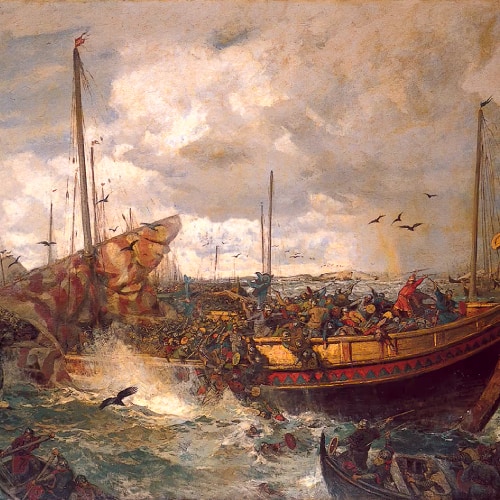

While the Jomsvikings greatly impacted Viking warrior culture, they only existed near the end of the Viking Age in the 10th and 11th centuries.
Svinflylking
A less common type of shamanic housecarl was the svinflylking. These warriors were associated with the wild boar and the goddess Freya.