
13 Famous Archers in World History
Archery was a vital skill for warriors and soldiers throughout the history of the world. Cultures across the globe utilized the bow and arrow as primary equipment.
From Native American groups to the Mongol Empire to English longbowmen of the Middle Ages, archery was important for hunting and fighting on nearly every continent.
The bows and arrows used by different people groups across the centuries varied in their construction and purpose. Over time, the significance of the bow and arrow in combat shifted as new weapons technology developed.


However, the bow and arrow were not at all rudimentary weapons. Archers had to be extremely strong and skilled to fire them accurately at the height of battle.
English longbowmen were considered elite fighters, and Mongol archers under Genghis Khan and other leaders are considered some of the most fearsome warriors in human history.
By the 19th century, archery became mainly a sport and style of hunting in the West.
Our list of the greatest and most famous archers in history spans time and geography, from early medieval China to 20th century Europe.
1) Lü Bu
(died 199, China)
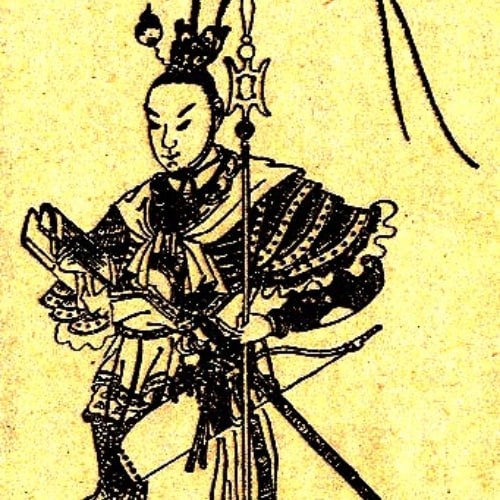

Lü Bu was a general during the Eastern Han dynasty. He specialized in archery and horsemanship. Lü Bu is a character in the Romance of the Three Kingdoms, which gives a romanticized portrayal of his life.
Although a mighty warrior, Lü Bu was also a highly unstable politician. He frequently switched allegiances and made rash decisions at the expense of his allies.
2) Huang Zhong
(in office 208-220, China)


Huang Zhong was a Chinese general in the 200s. He served the warlord Liu Bei. Huang Zhong is best known for leading his army to victory in the Battle of Mount Dingjun in 219.
His reputation as a skilled archer originates in the 14th century novel called Romance of the Three Kingdoms. The book is a romanticized account of the Three Kingdoms period in which Huang Zhong lived.
Author Luo Guanzhong describes him as an old, wise, and highly talented archer.
3) Einar Tambarskjelve
(980-1050, Norway)
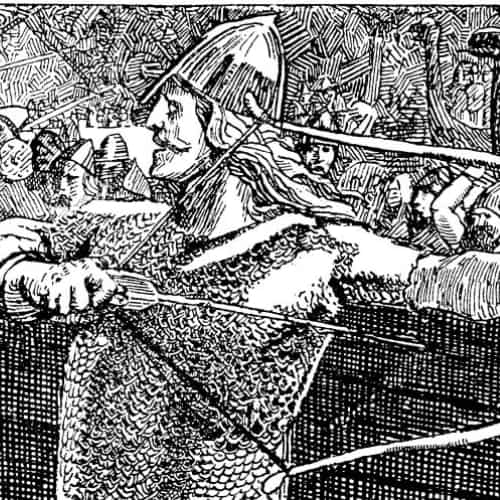

Einar Tambarskjelve was a Norwegian noble and politician who commanded his own army. He was an archer who participated in the Battle of Svolder.
Tambarskjelve personally opposed king Olaf Haraldsson and supported Danish attempts to overthrow him. This shrewd politician eventually gained power through the puppet king Magnus, the illegitimate son of Haraldsson.
Magnus ruled Norway as a joint ruler with Harald Sigurdsson, and Tambarskjelve worked behind the scenes to secure power. Deemed a threat by Harald, Einar Tambarskjelve and his son were assassinated at the king’s farm.
4) Yue Fei
(1103-1142, China)

_1_2016_January.jpg)
Yue Fei was a Chinese general who was highly educated. He was taught archery, literature, and other subjects by the teacher Zhou Tong.
Yue Fei is said to have been able to shoot a bow with both arms.
5) Zhou Tong
(died 1121, China)
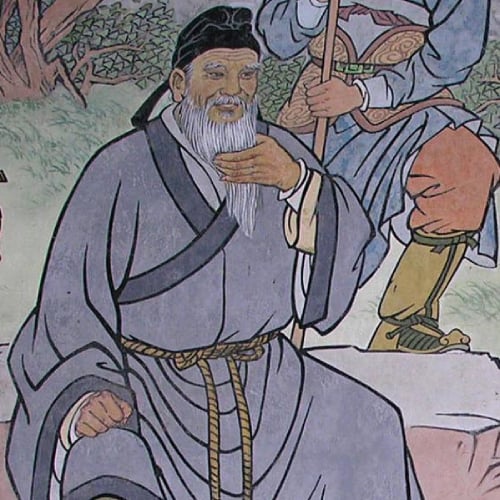

Zhou Tong was the archery teacher of Chinese general Yue Fei. A fictional portrayal of his life is recorded in The Story of Yue Fei (published in 1684).
This book gave Zhou Tong a new history. According to the book, this teacher possessed many martial and supernatural skills that he passed down to Yue Fei.
6) Minamoto no Tametomo
(1139-1170, Japan)
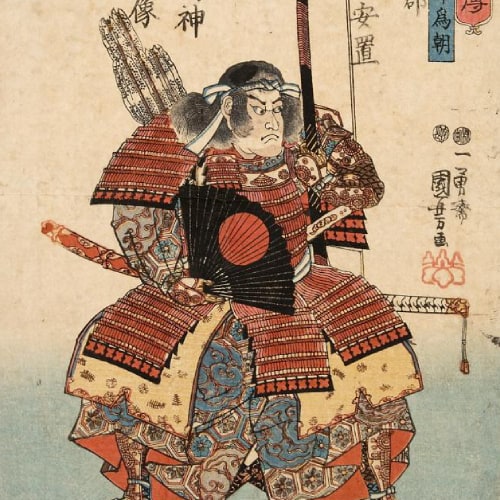

Minamoto no Tametomo was a samurai who excelled at archery. He participated in the Hōgen Rebellion, which was a brief civil war fought over succession.
Minamoto is a figure steeped in legend. He allegedly sunk an entire ship with only one arrow by puncturing the vessel below the waterline.
In other stories, Minamoto’s left arm is longer than his right to allow for a longer draw of the bow.
Minamoto met his end as a samurai after the Taira clan severed the sinew of his left arm. He was banished to an island where he committed suicide.
7) Genghis Khan
(1162-1227, Mongolia)
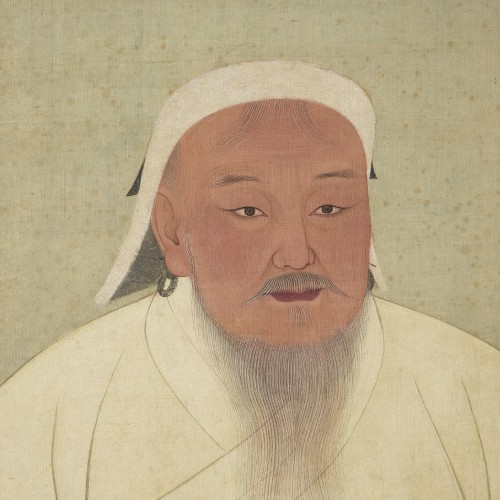

Most of us have heard of Genghis Khan and his military prowess. He was the founder of the Mongol Empire, which expanded across Central Asia during the 13th and 14th centuries.
Genghis Khan and his army relied heavily on the bow. Mongol archers were elite fighters who considered hunting a preparation for war.
Bows were the main weapon of the Mongol army. Most soldiers carried both long and short composite bows. Mongol bows were extremely effective with a range of 350 yards.
8) Horace A. Ford
(1822-1880, United Kingdom)
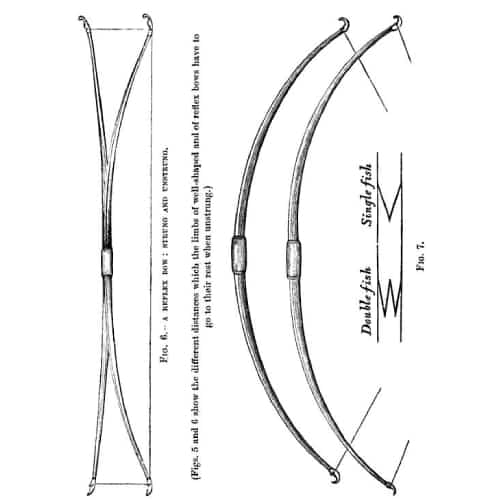

Horace A. Ford is considered one of the greatest target archers of all time. Ford won his first competition at the Grand National Archery Meeting after practicing for only four years.
He would go on to win eleven consecutive championships in target archery. Horace A. Ford shared his expertise in one of the most comprehensive books on archery entitled Archery: Its Theory and Practice.
This book covers the history and how-tos of various archery techniques.
9) Ishi
(1861-1916, United States)
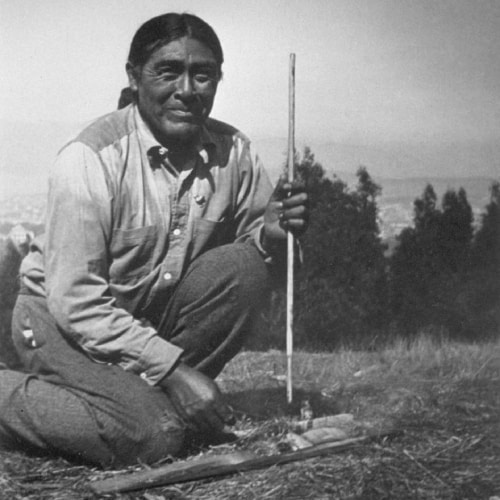

Ishi, the “last wild Indian,” was one of the last Yahi people of California. His Native people group was exterminated throughout the 19th century in what is called the California Genocide.
Ishi lived most of his life in the traditional way of his people. He was skilled at making bows and arrows and hunting. Ishi eventually entered society and was “studied” by anthropologists at the University of California-Berkeley.
He lacked immunity to common diseases due to his isolation and was under the care of doctor and teacher Saxton Temple Pope. The pair became good friends and Ishi taught Pope about traditional Yahi bowhunting.
10) Saxton Temple Pope
(1875-1926, United States)


Saxton Temple Pope was the doctor of Ishi. He was also a teacher, author, and outdoorsman with an interested in bowhunting.
Pope is considered the “father of modern bowhunting” and learned many skills from Ishi. After Ishi’s death, Pope continued to hunt with his friend Arthur Young. The duo hunted grizzly bears in Yellowstone using handmade bows.
Pope is remembered as an expert bowhunter. He is also credited with reintroducing Native American bow making skills.
11) Howard Hill
(1899-1975, United States)
.jpg)
Howard Hill was an expert bowman who called himself “the world’s greatest archer.” He was indeed skilled in field tournaments and trick shots.
Hill began using bows and arrows at the young age of four and created homemade archery sets as a child. He participated in longbow competitions and won most of his field tournaments in succession.
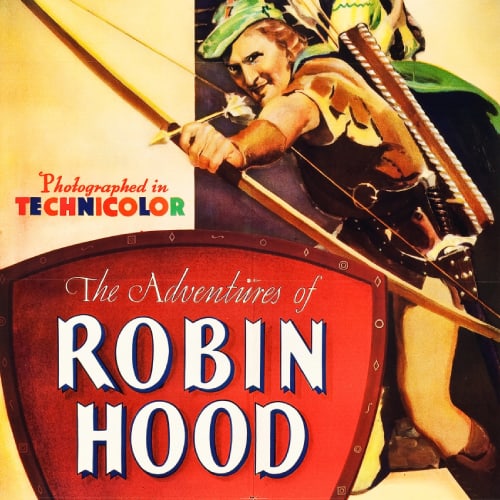
Howard Hill’s consistent performance helped him in his roles as an actor and technical advisor for archery in Hollywood. One of his most famous films is The Adventures Robin Hood.
In addition to competing and working in Hollywood, Howard Hill also produced his own instructional bowhunting films and hunted in his free time.
He was the first white man to kill an elephant using a traditional bow.
12) Fred Bear
(1902-1988, United States)
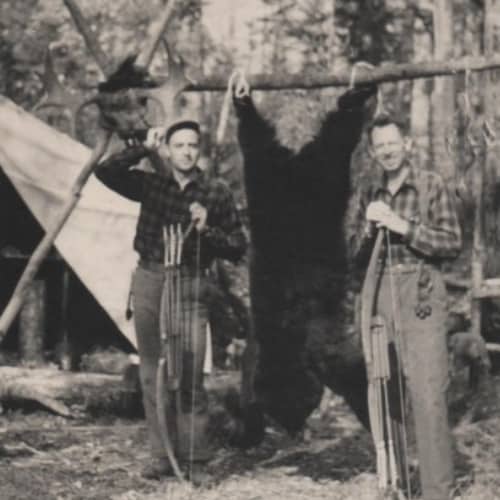

Fred Bear started bowhunting at 29, yet his natural talent makes him one of the greats in the sport. Bear was also an inventor who founded his own bow company.
Fred Bear featured in television programs and traveled extensively to hunt and educate people on bowhunting techniques. He broke archery records by hunting animals like brown bear, caribou, and moose.
13) Jack Churchill
(1906-1996, United Kingdom)
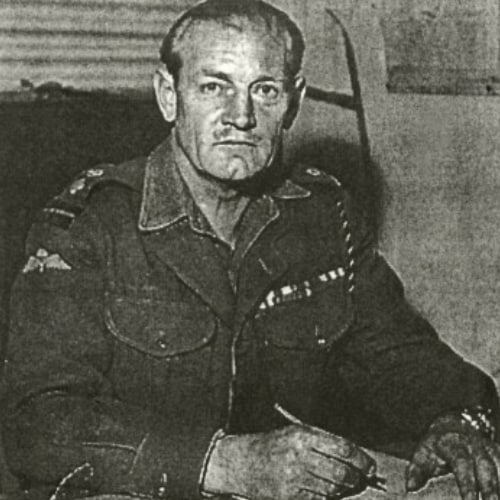

Jack Churchill is a colorful character in the history of World War II. He was known as “Fighting Jack” or “Mad Jack” due to his unusual use of a longbow during the war.
Churchill was a talented archer who participated in the 1939 World Archery Championship.
Churchill was part of the Manchester Regiment when he was called to the Expeditionary Force in France at the start of World War II. Throughout the war, Churchill chose to fight with a longbow, sword, and bagpipes.
His bow had an accurate range of 200 yards and Churchill made use of it engagements like the Battle of l’Epinette.
Churchill’s performance in the battle earned him the Military Cross for bravery. Other notable actions during the war include tunneling out of Sachsenhausen concentration camp and walking to freedom after escaping a prisoner of war camp.