

Enameling History: Ancient, Medieval, and Modern Methods [Updated]
Enameling is an art form with a rich global history. Cultures from ancient times to the present day have utilized enameling techniques for everyday items and precious works of art alike.
Enameling is the process of filling spaces with enamel to create designs and images. Enameling techniques have varied throughout the centuries, but we will discuss a few of the most popular techniques.


Enameled artifacts from the ancient, medieval, and modern periods are relatively common. With so many surviving examples of historical enamelwork, we are able to see the evolution of the art form that occurred across the centuries.
This article serves to summarize the long global history of enameling. Pieces from around the world are included to provide appropriate context for this unique art style.
Evidence of Ancient Enameling
.jpg)
Experts debate the origins of enameling, but most agree that the best and earliest example of enameling hails from the ancient Mycenaean culture. Gold rings featuring enamelwork were discovered in Cyprus and date to the 7th century BC.
Although these rings are proof that enameling was done since ancient times, examples of enamelwork in ancient Greece and Egypt are rare.
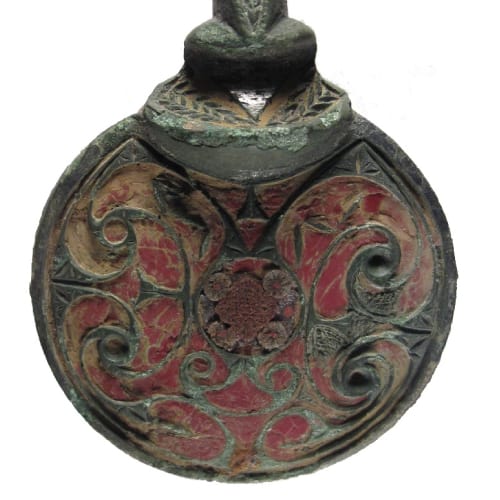
Ancient enamelwork is also found in the Caucasus and Celtic cultures. Examples of enameling can be seen on ancient Celtic objects (example above). The Battersea Shield, which dates to around 350 BC, is a famous example of Celtic enamelwork.
Enameling of Medieval Europe


Enamelwork is said to have been brought to Europe by the Byzantine princess Theophano when she married a Germanic king.
The Byzantines commonly replaced precious stones with more affordable cloisonné enamel. Cloisonné is an ancient form of enameling by which enamel is placed in partitions created by metal walls.
Byzantine enamel dates from the 6th the 12th centuries. Cloisonné miniature scenes are some of the most common examples of work from this time.


Enameling spread quickly across Europe and became a popular method for decorating religious and royal objects. Enameling reached its peak in the medieval period, with new techniques developing in centers like Limoges, France.


Limoges artists used cloisonné methods and the champlevé enameling style. Champlevé differs from cloisonné in that spaces are created by etching or carving out depressions in the metal rather than creating partitions with small walls.
Champlevé enameling in bronze and copper was common in France in the 12th century and onwards.


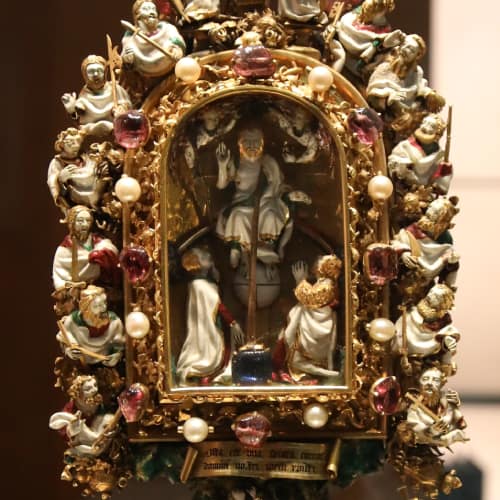
While France was a major center of enamelwork in medieval Europe, other countries developed their own styles. Enameling can be found on a wide array of medieval objects, from holy items like the Holy Thorn Reliquary to royal objects like the Royal Gold Cup.
.JPG)
Both of these objects date to the 14th century and include examples of classic medieval enamelwork. The Royal Gold Cup features early enameling in the basse-taille style. This technique developed in the 13th century and continued to be used throughout the medieval period.


Other enameling methods developed in the 15th century in Europe. Once again, Limoges, France led the way in innovations.
Artists in Limoges invented “painting” with enamels, which is referred to as Limoges enameling. Artists applied enamels next to each other without partitions to achieve new types of enamel objects, like portraits.
Enamelwork of Asia


China adopted cloisonné enamel techniques from the Byzantine and Islamic cultures in the 13th and 14th centuries. Cloisonné art reached its height during the Ming dynasty.
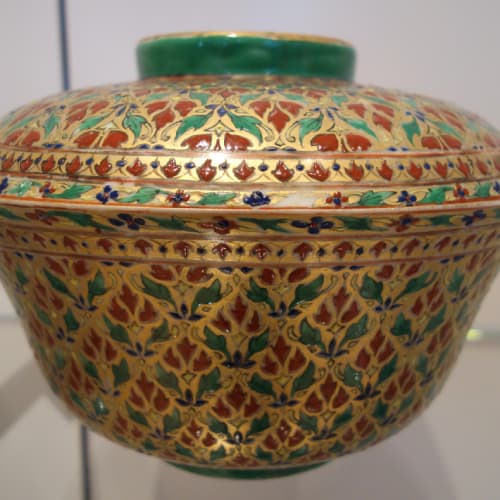

The Chinese developed painted enamels, or Canton enamels, using the same techniques as those of Limoges, France. Although enamelwork was prevalent throughout China, the ornate designs were not well suited to the refined homes of scholars.

.jpg)
Enamel art was therefore traditionally restricted to use in temples, palaces, and the rooms of women. By the 19th century, however, enamelwork was prized by all types of people.
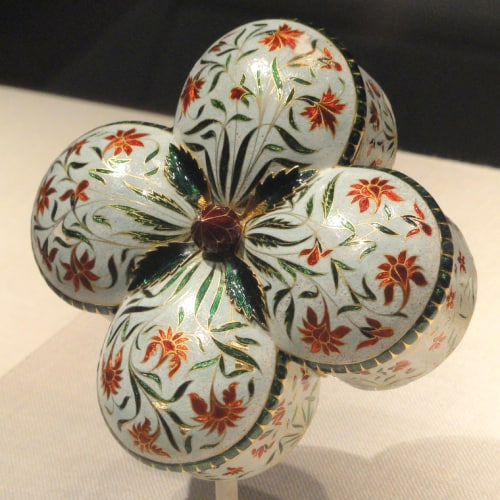

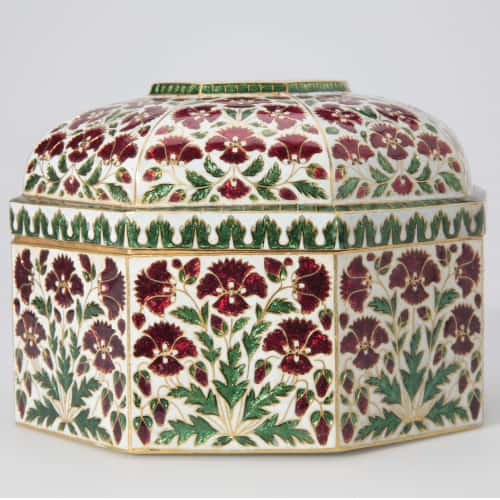
The Mughal Empire of south Asia crafted stunning works of enamel art. All types of objects were decorated with enamel, from home decor to jewelry.

Modern Enameling: Renaissance to 20th Century


Enameling continued to be a popular technique through the transition from Gothic, to Renaissance, to Baroque art styles. Artists enameled new objects like pocket watches.
Enameled jewelry flourished in the 17th to 19th centuries. Most jewelry of this type was produced in Geneva, Switzerland.
Transfer printing on enamel was developed in British factories during the 18th century. This method became popular for toymaking.
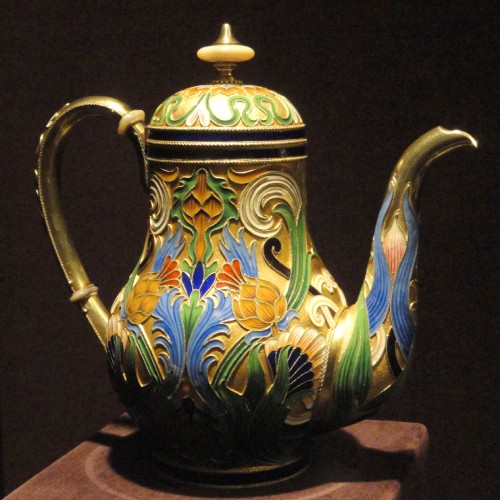

The Victorian era saw the rise of black enamel for everyday wear and mourning.


The work of Peter Carl Fabergé, a Russian jeweler, pushed the boundaries of enamelwork in the 19th and early 20th centuries. Most famous for his decorative eggs, Fabergé also decorated fragrance bottles and items for the home with intricate enamelwork.
.jpg)
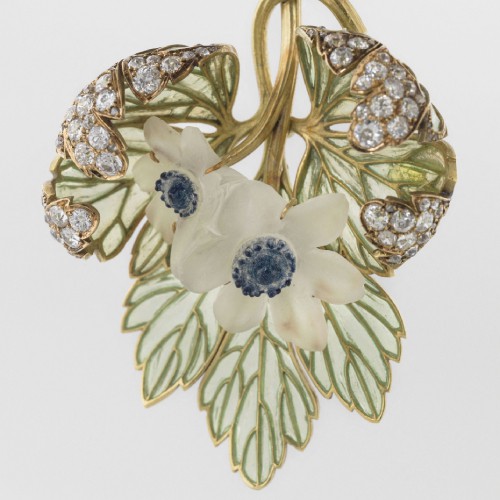
By the turn of the century, the Art Nouveau movement took the art world by storm. With it came a new type of enameling called plique-à-jour.


Using this method, artists could apply enamel between metal partitions without a metal backing. This gave plique-à-jour pieces the appearance of stained glass.
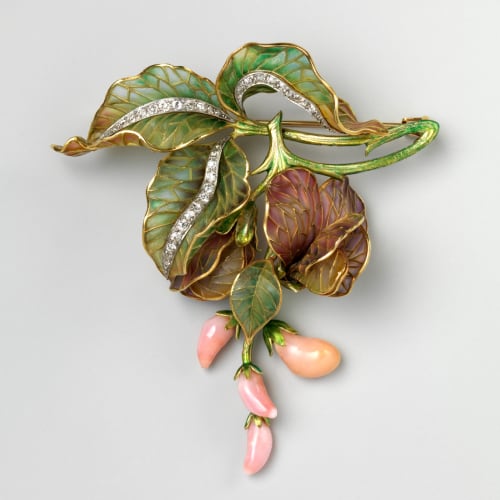

The delicate appearance of plique-à-jour perfectly complimented the natural forms of Art Nouveau pieces.