
15 Lesser Known & Obscure Greek Gods [Updated]
Most of us are familiar with the major Greek gods like Zeus, Poseidon, Hades, and Apollo. Tv shows, movies, books, and other entertainment have popularized these characters.
Classic Greek literature has kept the mythology of major Greek gods and goddesses alive for centuries. These gods and goddesses are popular because of their prominent roles in traditional Greek stories.
However, many minor gods are also important to the understanding of Greek mythology. Their characteristics and stories are extremely interesting and reveal much about ancient Greek society and knowledge.

The following are 15 lesser-known or obscure gods from Greek mythology. These gods are considered “minor” and outside the pantheon of the twelve major gods. Some are primordial, or extremely ancient figures, while others live secluded in the Underworld.
Many are rural gods who enjoyed popularity outside of major cities like Athens.
Regardless of their positions, these gods are interesting characters who assist the major gods in important ways.
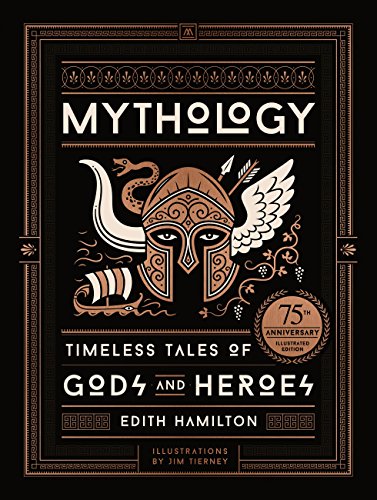
- A good option for a Book Lover
- Good one for reading
- Comes in Good condition


1) Aether


Aether is the god of light and the sky. He is the son of Nyx and is a primordial god. This means that he was one of the first gods to appear from empty space.
This ancient god has no real personification in ancient Greek mythology. Instead, Aether takes the form of his literal element. Aether’s domain is the moon, stars, sun, clouds, and mountains.
He embodies the “upper air” or “breath of gods.” Aether is basically space and anything “high” compared to the position of humans.
This god is the father of Gaia, the mother of the earth.
Aether inspired the concept of ether, which is the fifth element. The word “ethereal” derives from this god’s name.
2) Charon

.jpg)
Charon is the boatman who ferries the dead across the River Styx in the Underworld. He requires a single gold coin for his service.
Charon famously took Hercules across the river to kidnap Cerberus.
Although Charon is an Underworld deity, he is not explicitly a god in the way others are. He is the child of Nyx and Erebus, two primordial deities. This figures are ancient, first-generation deities who precede major gods like Zeus, Hades, and others.
3) Pan


Pan is a god of nature and the friend of nymphs. He has the unique torso of a man and legs of a goat. Pan is one of the oldest gods and possesses great strength, endurance, and the ability of teleportation.
Because of his largely rural following, Pan was worshiped in caves and grottos rather than large temples.
4) Morpheus


Morpheus is the god of dreams and is the son of Hypnos. He lives in the underworld and gives people messages from the gods through their dreams. Because of this, he is one of the busiest Greek gods.
The God of Dreams is sometimes depicted as a winged demon. He appears in Ovid’s famous Metamorphosis.
5) Hypnos


Hypnos, the god of sleep, is the brother of Thanatos (described below). He lives in silence in an Underworld cave.
After Zeus forbade the involvement of Mount Olympus gods in the Trojan War, Hera seeks out Hypnos for help. He puts Zeus to sleep, which allows the Greeks to win the war.
Unsurprisingly, the English words “hypnosis” and “hypnotic” stem from the name Hypnos.
6) Deimos

![Quatremère-de-Quincy (Antoine-Chrysostome), [1755-1849]](https://commons.wikimedia.org/wiki/File:The_shield_of_Achilles_according_to_the_description_of_Homere_by_Quatremere_de_Quincy.jpg)
He is the son of Ares and Aphrodite. This god is depicted as a young man or a lion in Greek art and appears on the Shield of Achilles.
7) Moros


Moros is the Greek god of death and suffering. He is also the god of impending doom. Because he is the personification of destiny, Moros is considered to be truly invincible.
This god is the son of Nyx and the brother of the Fates, who share his association with destiny.
8) Thanatos


Thanatos is the twin of Hypnos and the god of nonviolent deaths. He has a gentler touch than Moros, the god of death and suffering.
Thanatos has wings in most Greek depictions.
9) Proteus

.jpg)
Proteus is a sea god and the son of the much more famous Poseidon. Proteus is the only sea god among his 2,999 river god brothers.
This god has the powers of prophecy and shape shifting.
10) Achelous


Achelous is the god of rivers and water. He was associated with the Achelous River in western Greece. This god is sometimes depicted with the face of a bull. He was a popular emblem of Greek mercenaries.
11) Momus


Momus, the god of satire and humor, is an expert at seeing faults in almost everyone. His criticisms of Athena, Poseidon, and even Zeus lead to his banishment from Mount Olympus.
This satirical god is said to have been annoyed by Aphrodite because she was the only goddess in whom Momus couldn’t find a fault.
Momus is credited with starting the Trojan War.
He is depicted wearing a mask in Greek art. In later periods, Momus takes the form of a jester, as seen in the eighteenth century tarot artwork shown above.
12) Dionysus

.jpg)
Dionysus is the god of wine, orchards, fruit, festivities, and the theater. He is the nephew of Aristaeus (listed below).
Worship of Dionysus was popularized in the 7th century BC, but is thought to have started as early as 1500-1100 BC in the Mycenaean culture.
This god had a cult following. Worship of Dionysus was extremely experiential, with worshippers believing that they became possessed by the god himself.
13) Aristaeus


Aristaeus is the son of Apollo and the uncle of Dionysus (discussed above). He is the god of traditional crafts and occupations like beekeeping, cheesemaking, herding, hunting, and olive tending.
Although a minor god in Athens, Aristaeus was more popular in the rural areas of Macedonia, Arcadia, and Sicily. Those living in the country could relate to Aristaeus better than urban dwellers.
Aristaeus is said to have learned his rustic skills from Apollo, Dionysus, Demeter, and other nature-related gods and goddesses.
14) Hesperus


Hesperus is the god of the evening star and is associated with the planet Venus. Sailors in ancient Greece relied on the bright “evening star,” or Venus, for navigation at night.
This god has a disputed parentage.
15) Geras


Geras is the Greek god of aging. The English word “geriatric” is thought to have derived from the name of this frail god.
Geras is usually depicted a wizened old man on vases and other art. He is usually asking Hercules for assistance. Geras lives in the underworld, due to his closeness with death.